

Henderik Proper
Univ.Prof. PhD
Henderik Proper
- Email: henderik.proper@tuwien.ac.at
- Phone: +43-1-58801-194303
- Office: FB0101 (1040 Wien, Erzherzog-Johann-Platz 1)
- About:
- Orcid: 0000-0002-7318-2496
- Keywords:
- Roles: Full Professor
Publications
Digital Twins for Building Renovation – What is the Added Value?
 Callista Raschauer
 Marianne Schnellmann
Keywords: Digital Twins, Building Renovation, Added Value of Digital Twins
Astract: Driven by Europe’s ageing building stock and the EU’s sustainability targets, renovation of existing buildings has become increasingly important. Building renovation typically comprises three types of activities (operations & facility management, condition assessment & monitoring, and transformation planning), each involving key decisions that can benefit from advanced decision support systems such as digital twins (DTs). DTs carry the promise of improved decision-making about, as well as the monitoring and understanding of, the twinned entity. This paper investigates how DTs can support, and add value to, the decision-making involved in building renovation and how the added value of these DTs can be assessed and (ideally be) quantified. In doing so, this paper focuses primarily on operations & facility management-related activities. By connecting use cases with quantification methods, this paper suggests pathways to evaluate and prioritise DT investments in the context of building renovation.
Raschauer, C., Schnellmann, M., & Proper, H. A. (2026). Digital Twins for Building Renovation – What is the Added Value? In T. Polacsek, M. Ruiz, J. Ralyté, & F. RAVAT (Eds.), Research Challenges in Information Science (pp. 596–611). Springer. https://doi.org/10.1007/978-3-032-26836-5_36
Keywords: Business process simulation, Video generation, Process modeling
Astract: Video generation models have opened new opportunities for simulating business processes through realistic visualizations. However, current video generation approaches often fall short of capturing the inherent dynamics and structure of business processes and tend to produce inconsistent simulations that lack the rigor provided by formal process models. To address these limitations, we introduce a novel method termed Petri Net structure-driven video generation, which integrates the inherent structural information from process models to tailor video simulations more closely to the dynamics of business processes. We explore multiple strategies for this tailoring, including i) the use of domain knowledge-rich prompting, ii) a storyboard employing image references extracted from process evidence data, and iii) generated image references informed by process models. We evaluate our method across diverse domains, and demonstrate that the Petri Net structure-driven approach improves the perceived usefulness and consistency of the simulated video, marking a step forward in the use of generative AI for more realistic business process simulation.
Gavric, A., Bork, D., & Proper, H. (2025). Turning Process Models into Videos. In 2025 27th International Conference on Business Informatics (CBI) (pp. 32–41). IEEE. https://doi.org/10.1109/CBI68102.2025.00015
Towards Architectural Coordination of Digital Twin Development in Urban Planning
Marianne SchnellmannMarija BjekovićJean-Sébastien SottetKeywords: Enterprise Architecture, Architectural Coordination, Digital Twins for Urban Planning, Local Digital Twin
Astract: Digital Twins (DTs) carry the promise of improved decision-making about, as well as monitoring and understanding of, the twinned entity. This makes them an attractive instrument to support the, often complex and multi-faceted, decision-making processes germane to urban planning. DTs require considerable technological investments, as they tend to be data-hungry and computing-intensive. Business-wise, such investments are only meaningful if they really add value to the intended decision-making processes. However, most current DT development approaches primarily focus on the technological potential of DTs within the limited scope of isolated business scenarios, and rarely address trade-offs between costs and benefits towards the business case, let alone the broader implications for IT/IS portfolio management. These broader considerations are crucial in urban planning contexts, which typically involve a broad ecosystem of parties, complex decision-making challenges, and pre-existing technological landscapes. Drawing on the discipline of Enterprise Architecture Management (EAM), this paper argues that architectural coordination of DT development initiatives would enable more effective valorisation of DTs potential, and more effective management of DT-related technology within a broader technological landscape. To this end, the paper discusses the vision for and an initial sketch of a specialisation of EAM for DT development.
Schnellmann, M., Bjeković, M., Proper, H. A., & Sottet, J.-S. (2025). Towards Architectural Coordination of Digital Twin Development in Urban Planning. In H.-G. Fill, Y. Wautelet, J. Ralyté, & J. Zdravkovic (Eds.), The Practice of Enterprise Modeling : 18th IFIP Working Conference, PoEM 2025, Geneva, Switzerland, December 3–5, 2025, Proceedings (pp. 281–297). Springer. https://doi.org/10.1007/978-3-032-12063-2_18
Towards Human-in-the-Loop LLM-Enabled Domain Modeling
Jonathan SilvaQin MaJordi CabotPierre KelsenKeywords: AI-assisted Domain Modeling, Domain Model Validation, Domain Modeling, Large Language Models
Astract: The use of Large Language Models (LLMs), combined with advanced prompting strategies, automates the creation of domain models from textual domain descriptions. However, the output is often influenced by mistakes and limitations that arise from the inherent characteristics of LLMs, including hallucinations and inconsistencies. Additionally, ambiguities and incompleteness in the input text further affect the quality of the results.
We propose a new LLM-based modeling method with human in the loop that aims to combine the strengths of automatic model creation with human supervision and interaction to refine and validate the model.
In our approach, the LLM generates an initial draft model from textual descriptions. This draft is then subjected to a feedback loop moderated by a rule-based agent, which engages the user through a Q&A dialogue. The rule-based agent selects the questions based on their potential to clarify the most uncertain aspects of the model up to that point.
Silva, J., Ma, Q., Cabot, J., Kelsen, P., & Proper, H. A. (2025). Towards Human-in-the-Loop LLM-Enabled Domain Modeling. In D. Bork, R. Lukyanenko, & S. Sadiq (Eds.), Conceptual Modeling : 44th International Conference, ER 2025, Poitiers, France, October 20–23, 2025, Proceedings (pp. 127–145). Springer. https://doi.org/10.1007/978-3-032-08623-5_7
Exploring modeling methods for information systems analysis and design: a data-driven retrospective
Iris Reinhartz-BergerAdir SolomonJelena ZdravkovicJohn KrogstieKeywords: BERTopic, Data-driven approach, Dynamic Topic Modeling, EMMSAD, IS analysis and design
Astract: Modeling for information systems (IS) analysis and design offers broad insights into the advances and challenges of enterprise, business process, software, and conceptual modeling. In celebration of its 30th edition, this paper presents a data-driven retrospective analysis of studies published at the Exploring Modeling Methods for Systems Analysis and Development (EMMSAD) working conference from 2005 to 2024. EMMSAD has long been a key venue for research on Information Systems (IS) Modeling, covering areas such as conceptual modeling, enterprise modeling, and model-driven engineering, as well as the evaluation of modeling techniques and tools. Using machine learning, specifically Dynamic Topic Modeling (DTM) with BERTopic, this study identifies recurring topics, emerging trends, and shifts in research focus within the IS modeling community. The findings highlight key areas of alignment between IS modeling and the broader modeling landscape, providing insights into the field’s evolution and future research opportunities.
Reinhartz-Berger, I., Solomon, A., Zdravkovic, J., Krogstie, J., & Proper, H. A. (2025). Exploring modeling methods for information systems analysis and design: a data-driven retrospective. Software and Systems Modeling. https://doi.org/10.1007/s10270-025-01302-4
Teaching
Seminar for Master Students in Software Engineering (Software Engineering and Programming)
Semester: 2026S; Nr: 180.008; Type: SE; Hours: 1.0; Language: English; View on TISSResearch Seminar
Semester: 2026S; Nr: 188.446; Type: SE; Hours: 2.0; Language: if required in English; View on TISSLiterature Seminar for PhD Students
Semester: 2026S; Nr: 188.512; Type: SE; Hours: 2.0; Language: German; View on TISSBachelor Thesis for Informatics and Business Informatics
Semester: 2026S; Nr: 188.926; Type: PR; Hours: 5.0; Language: if required in English; View on TISSScientific Research and Writing
Semester: 2026S; Nr: 193.052; Type: SE; Hours: 2.0; Language: German; View on TISSProject in Computer Science 1
Semester: 2026S; Nr: 194.145; Type: PR; Hours: 4.0; Language: if required in English; View on TISSProject in Computer Science 2
Semester: 2026S; Nr: 194.146; Type: PR; Hours: 4.0; Language: if required in English; View on TISSBusiness-IT-Alignment
Semester: 2026S; Nr: 194.153; Type: VU; Hours: 2.0; Language: English; View on TISSResearch Seminar
Semester: 2025W; Nr: 188.446; Type: SE; Hours: 2.0; Language: if required in English; View on TISSLiterature Seminar for PhD Students
Semester: 2025W; Nr: 188.512; Type: SE; Hours: 2.0; Language: German; View on TISSBachelor Thesis for Informatics and Business Informatics
Semester: 2025W; Nr: 188.926; Type: PR; Hours: 5.0; Language: if required in English; View on TISSInformation Systems Engineering
Semester: 2025W; Nr: 194.143; Type: VU; Hours: 4.0; Language: English; View on TISSProject in Computer Science 1
Semester: 2025W; Nr: 194.145; Type: PR; Hours: 4.0; Language: if required in English; View on TISSEnterprise & Process Engineering
Semester: 2025W; Nr: 194.152; Type: VU; Hours: 4.0; Language: English; View on TISSSeminar in Computer Science (Model Engineering)
Semester: 2025W; Nr: 194.198; Type: SE; Hours: 2.0; Language: German; View on TISSTeam
Business Informatics Group, TU Wien
Professors
Christian Huemer
Ao.Univ.Prof. Mag.rer.soc.oec.Dr.rer.soc.oec.
Dominik Bork
Associate Prof. Dipl.-Wirtsch.Inf.Univ.Dr.rer.pol.
Gerti Kappel
O.Univ.Prof.in Dipl.-Ing.inMag.a Dr.in techn.
Henderik Proper
Univ.Prof. PhD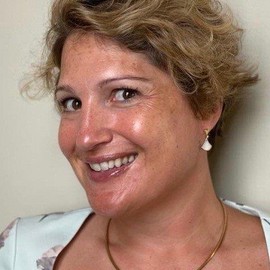

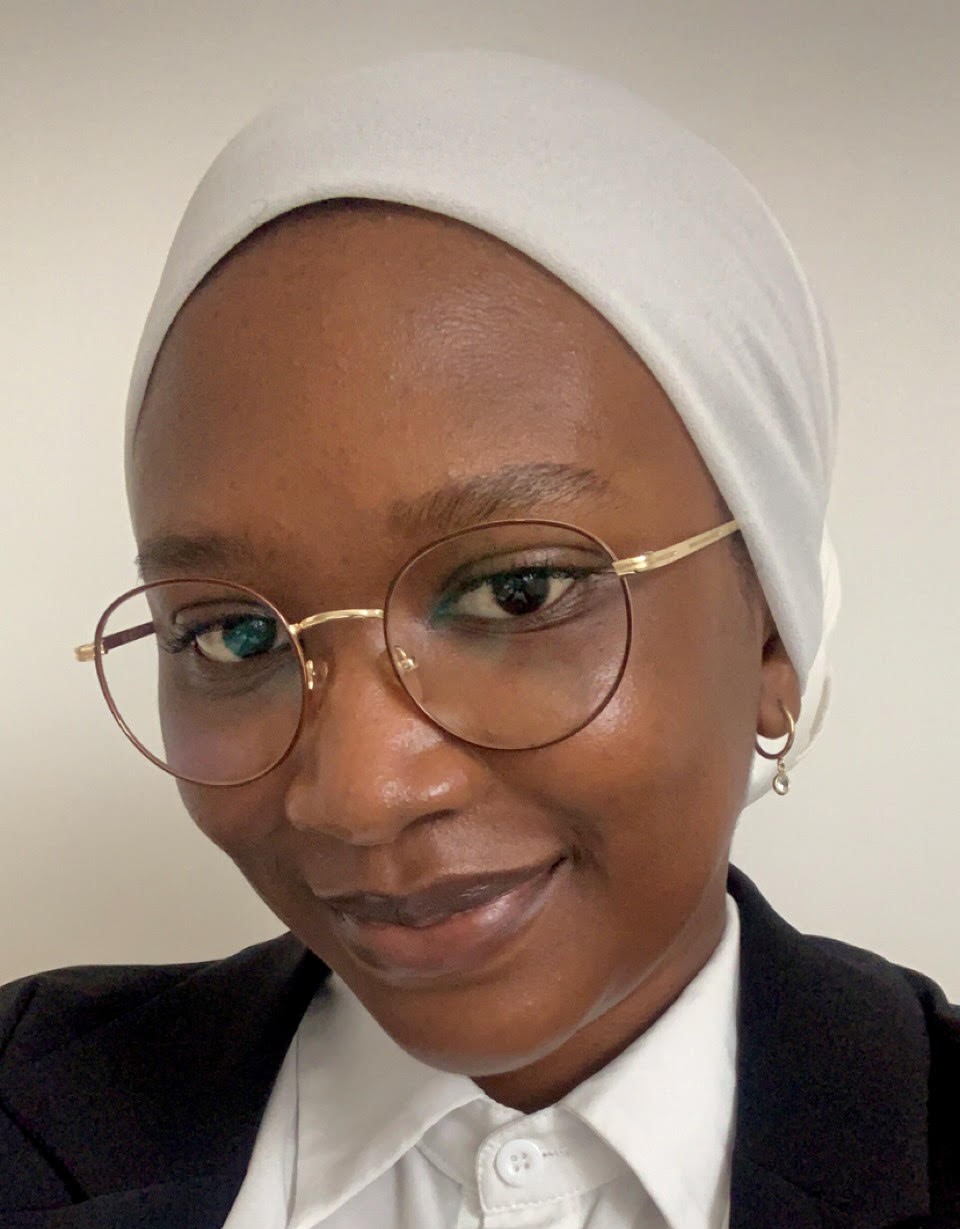
Researchers
Aleksandar Gavric
Univ.Ass. MEng MSc BEngCharlotte Roos R. Verbruggen
Univ.Ass. PhDJonas Max Lindner
Univ.Ass. MSc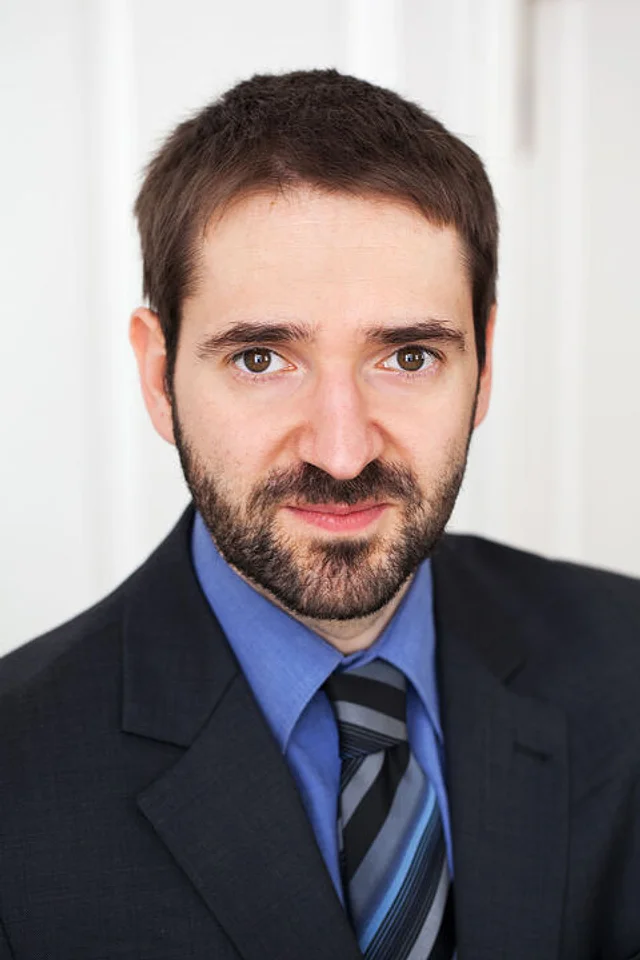
Marco Huymajer
Senior Lecturer Dipl.-Ing. BSc
Marianne Schnellmann
Univ.Ass. MScMarion Murzek
Senior Lecturer Mag.a rer.soc.oec.Dr.in rer.soc.oec.
Marion Scholz
Senior Lecturer Dipl.-Ing.inMag.a rer.soc.oec.
Miki Zehetner
Univ.Ass. DI Bakk.rer.soc.oec. MSc