

Henderik Proper
Univ.Prof. PhD
Henderik Proper
- Email: henderik.proper@tuwien.ac.at
- Phone: +43-1-58801-194303
- Office: FB0101 (1040 Wien, Erzherzog-Johann-Platz 1)
- About:
- Orcid: 0000-0002-7318-2496
- Keywords:
- Roles: Full Professor
Publications
Towards IT Platform Independence with pimUML : From Semantically Rich DEMO Models to Low Code
 Nicholas A. BzowskiMarien R. Krouwel
Keywords: Model Driven Architecture, low code, enterprise ontology, DEMO, UML, Mendix
Astract: With the ever-growing complexity of modern enterprises, and their supporting IT systems, it becomes increasingly challenging to maintain good business-IT alignment. In recent work, we reported on a model-driven engineering approach to transform, (business) semantically rich, DEMO models to low-code software artifacts for the Mendix low-code platform, with the aim to improve business-IT alignment. The latter approach, however, heavily depends on the specifics of the chosen platform. To reduce IT platform dependence, the Model Driven Architecture approach suggests to discern three levels of models of a system: a business-oriented computation independent model (CIM), an (IT) platform independent model (PIM), and an (IT) platform specific model (PSM). In this paper, we present a more refined approach with the aim to increase the extensibility of the existing DEMO to Mendix transformation to other target IT-platforms, while also “opening up” for other CIMs besides DEMO models. The development of this approach is done in multiple (agile) design cycles, in which pimUML, a novel UML profile to express PIM models, is developed and evaluated for preservation of semantics in each transformation step.
Bzowski, N. A., Krouwel, M. R., & Proper, H. A. (2026). Towards IT Platform Independence with pimUML : From Semantically Rich DEMO Models to Low Code. In S. Assar, G. Koutsopoulos, J. Ralyté, J. Zdravkovic, H.-G. Fill, Y. Wautelet, M. Ruiz, E. Serral Asensio, F. Härer, E. Polini, A. Gutschmidt, I. Rychkova, & J. Stirna (Eds.), PoEM Companion 2025 : Companion Proceedings of the 18th IFIP WG 8.1 Working Conference on the Practice of Enterprise Modeling Forum, Business Case & Tool Forum, Doctoral Consortium, and Session on Advancing Enterprise Modeling co-located with PoEM 2025, Geneva, Switzerland, December 3-5, 2025. https://doi.org/10.34726/12124
Mapping the Pain: How Modelers Experience and Respond to Common Domain Modeling Frustrations
Isadora ValleTiago Prince SalesEduardo GuerraMaya DanevaLuiz Olavo Bonino da Silva SantosGiancarlo GuizzardiKeywords: Conceptual Modeling, Domain Modeling, Modeling Experience, Pain Points
Astract: Despite the widespread use of domain models, the modeling process remains underexplored, particularly regarding the interactions among agents, products, and activities. Building on prior work that identified 16 recurrent moments of dissatisfaction (“pain points”) experienced by modelers during these interactions, this study offers a deeper analysis to clarify the significance of these pain points and support improvements in modeling practice. Through an online survey of 49 modelers, the study provides empirical evidence on the frequency of these moments, the reasons behind the frustrations they cause, and the strategies modelers use to address them. The descriptive analysis offers valuable insights into these aspects, revealing interesting patterns among modelers. These findings have implications for practice and academia, offering a foundation to enhance the modeling experience and improve the value of domain modeling efforts.
Valle, I., Sales, T. P., Guerra, E., Daneva, M., da Silva Santos, L. O. B., Proper, H., & Guizzardi, G. (2026). Mapping the Pain: How Modelers Experience and Respond to Common Domain Modeling Frustrations. In Enterprise Design, Operations, and Computing : 29th International Conference, EDOC 2025, Lisbon, Portugal, September 9–12, 2025, Revised Selected Papers (pp. 193–209). Springer. https://doi.org/10.1007/978-3-032-15140-7_11
The HESTIA Framework : From an Internet of Things to an Internet of Meaning
 Marianne Schnellmann
Keywords: Internet of Meaning, HESTIA, Domain-Specific Modeling
Astract: At first glance, the Internet of Things brings about an expectation for users (be it individuals or organizations) to interact with the many Internet-connected “things” in a natural way while also enhancing everyday work and life. The emergence of smart cities, and smart homes, also fuels the need for a broad audience to interact with the Internet of Things in a natural way. In current practice, however, users are confronted with the need to negotiate a complex landscape involving a myriad of protocols, standards, and work-arounds to integrate “legacy” devices, etc. We contend that users should not have to think about their world in terms of specific sensors, actuators, gateways, and protocols but rather in terms of room temperatures, the desire to increase the temperature in the living room, the concern that the plants in the garden are watered on time, etc. This creates a need to bridge this gap by creating a semantically meaningful layer of abstraction on top of the sensors and actuators that make up the “device and protocols oriented” Internet of Things, to create an Internet of Meaning. To this end, this chapter reports on the HESTIA framework, which combines: (1) An abstraction of the implementation details pertaining to, e.g., different protocols, standards, etc. (2) A domain-specific (conceptual) modeling framework in terms of which “things” can be captured in a way that is meaningful to the domain at hand (3) Based on this, a domain-specific language that is understandable by the user, enabling users to define control/behavioral rules in terms that are meaningful to them The presented HESTIA framework will be illustrated in terms of examples in the context of home and garden automation. Though such application contexts seem less challenging and complex than industrial Internet of Things applications, the variety of devices and protocols and distance between users and the technical details are often larger than in the case of industrial Internet of Things.
Schnellmann, M., & Proper, H. A. (2026). The HESTIA Framework : From an Internet of Things to an Internet of Meaning. In X. Boucher, R. A. Buchmann, H.-G. Fill, D. Kyritsis, & W. Utz (Eds.), Domain-Specific Conceptual Modeling : The OMiLAB Community of Practice (pp. 227–251). Springer. https://doi.org/10.1007/978-3-031-98660-4_11
A decision-support model for data product valuation in the energy sector: A multi-criteria perspective
Markus HafnerMiguel Mira da SilvaMónica D. OliveiraFrederico CabralKeywords: Data valuation, data value, MACBETH, MCDA, Multi-criteria evaluation
Astract: Determining the value of data products remains a challenge for enterprises and academia, despite the growing recognition of data as a strategic asset across their business operations. This complexity arises from varying definitions of data value, diverse stakeholder perspectives, and the interdisciplinarity of data valuation. To address these challenges, this study develops a multi-criteria evaluation model based on the MACBETH approach to help Galp Energia, a Portuguese energy company, assess the value of data products in its renewables division. The developed model incorporates seven criteria across an enterprise architecture’s business, data, and application/technology layer, providing a comprehensive assessment of five data products. The study contributes to the literature by proposing a tailorable data valuation approach that may be applicable to other industries. Beyond quantifying the data product value, the resulting model serves as a managerial tool to support data-driven decision-making. The model is constructed using a robust approach and overcomes the limitations of existing models, such as oversimplification and practical implementation challenges. Additionally, it fosters interdisciplinary collaboration between research and industry. Future research directions include using the model as a foundation for developing modular data valuation frameworks, exploring its application across sectors, and integrating cross-sector benchmarks.
Hafner, M., da Silva, M. M., Oliveira, M. D., Cabral, F., & Proper, H. A. (2026). A decision-support model for data product valuation in the energy sector: A multi-criteria perspective. Discourse & Communication, 1–23. https://doi.org/10.1080/17509653.2025.2609822
Beyond Logs: AI’s Internal Representations as the New Process Evidence
Keywords: AI Interpretability, Embedding Space, Internal Representations, Multimodal Data, Semantic Event Matching
Astract: Traditional process mining relies on symbolic event logs that represent activities as discrete labels, often overlooking the rich contextual and semantic nuances found in real-world data such as textual reports, visual records, or sensor outputs. In this paper, we propose a paradigm shift: using the internal representations of AI models—embedding spaces learned from data—as the foundation for process mining. Our framework performs both process discovery and conformance checking directly in these continuous vector spaces, enabling the detection of semantically similar yet lexically divergent events. We evaluate our approach along three dimensions: (i) whether embedding-based discovery maintains or improves accuracy over symbolic baselines, (ii) whether multimodal sources such as video and audio can be processed as unified embeddings for mining purposes, and (iii) whether conformance checking in embedding space enables alignment across noisy or semantically perturbed traces. By treating AI’s internal representations as a novel form of process evidence, we show how process mining can move beyond traditional logs and unlock deeper, semantically enriched interpretations of real-world workflows.
Gavric, A., Bork, D., & Proper, H. (2026). Beyond Logs: AI’s Internal Representations as the New Process Evidence. In Business Process Management: Responsible BPM Forum, Process Technology Forum, Educators Forum (pp. 232–246). https://doi.org/10.1007/978-3-032-02936-2_17
Teaching
Seminar for Master Students in Software Engineering (Software Engineering and Programming)
Semester: 2026S; Nr: 180.008; Type: SE; Hours: 1.0; Language: English; View on TISSResearch Seminar
Semester: 2026S; Nr: 188.446; Type: SE; Hours: 2.0; Language: if required in English; View on TISSLiterature Seminar for PhD Students
Semester: 2026S; Nr: 188.512; Type: SE; Hours: 2.0; Language: German; View on TISSBachelor Thesis for Informatics and Business Informatics
Semester: 2026S; Nr: 188.926; Type: PR; Hours: 5.0; Language: if required in English; View on TISSScientific Research and Writing
Semester: 2026S; Nr: 193.052; Type: SE; Hours: 2.0; Language: German; View on TISSProject in Computer Science 1
Semester: 2026S; Nr: 194.145; Type: PR; Hours: 4.0; Language: if required in English; View on TISSProject in Computer Science 2
Semester: 2026S; Nr: 194.146; Type: PR; Hours: 4.0; Language: if required in English; View on TISSBusiness-IT-Alignment
Semester: 2026S; Nr: 194.153; Type: VU; Hours: 2.0; Language: English; View on TISSResearch Seminar
Semester: 2025W; Nr: 188.446; Type: SE; Hours: 2.0; Language: if required in English; View on TISSLiterature Seminar for PhD Students
Semester: 2025W; Nr: 188.512; Type: SE; Hours: 2.0; Language: German; View on TISSBachelor Thesis for Informatics and Business Informatics
Semester: 2025W; Nr: 188.926; Type: PR; Hours: 5.0; Language: if required in English; View on TISSInformation Systems Engineering
Semester: 2025W; Nr: 194.143; Type: VU; Hours: 4.0; Language: English; View on TISSProject in Computer Science 1
Semester: 2025W; Nr: 194.145; Type: PR; Hours: 4.0; Language: if required in English; View on TISSEnterprise & Process Engineering
Semester: 2025W; Nr: 194.152; Type: VU; Hours: 4.0; Language: English; View on TISSSeminar in Computer Science (Model Engineering)
Semester: 2025W; Nr: 194.198; Type: SE; Hours: 2.0; Language: German; View on TISSTeam
Business Informatics Group, TU Wien
Professors
Christian Huemer
Ao.Univ.Prof. Mag.rer.soc.oec.Dr.rer.soc.oec.
Dominik Bork
Associate Prof. Dipl.-Wirtsch.Inf.Univ.Dr.rer.pol.
Gerti Kappel
O.Univ.Prof.in Dipl.-Ing.inMag.a Dr.in techn.
Henderik Proper
Univ.Prof. PhD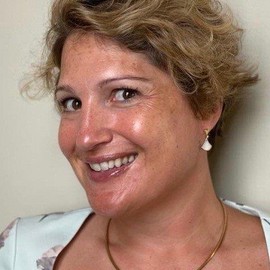


Researchers
Aleksandar Gavric
Univ.Ass. MEng MSc BEngCharlotte Roos R. Verbruggen
Univ.Ass. PhDJonas Max Lindner
Univ.Ass. MSc
Marco Huymajer
Senior Lecturer Dipl.-Ing. BSc
Marianne Schnellmann
Univ.Ass. MScMarion Murzek
Senior Lecturer Mag.a rer.soc.oec.Dr.in rer.soc.oec.
Marion Scholz
Senior Lecturer Dipl.-Ing.inMag.a rer.soc.oec.
Miki Zehetner
Univ.Ass. DI Bakk.rer.soc.oec. MSc