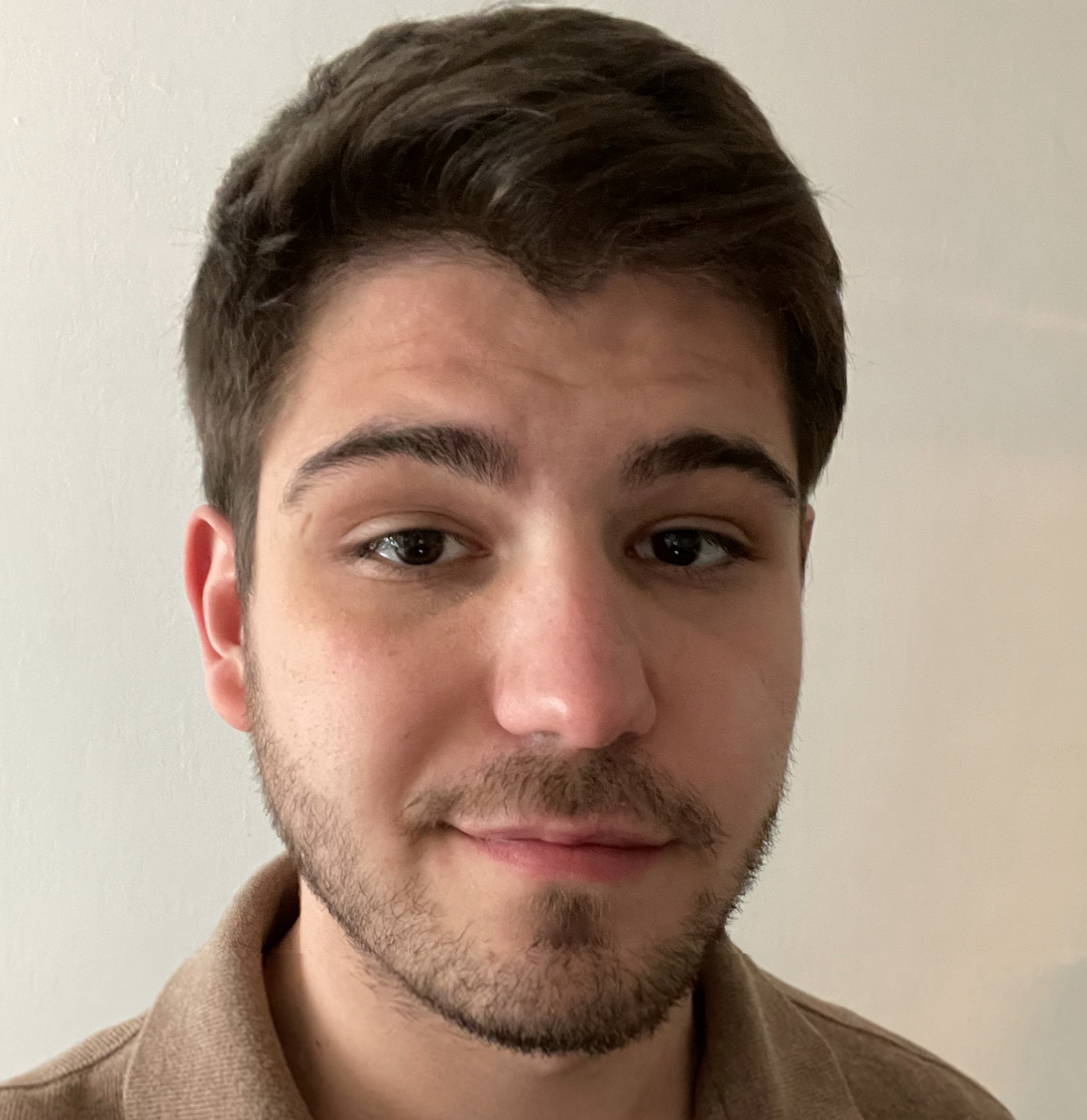

Henderik Proper
Univ.Prof. PhD
Henderik Proper
- Email: henderik.proper@tuwien.ac.at
- Phone: +43-1-58801-194303
- Office: FB0101 (1040 Wien, Erzherzog-Johann-Platz 1)
- About:
- Orcid: 0000-0002-7318-2496
- Keywords:
- Roles: Full Professor
Publications
Stakeholder-specific Jargon-based Representation of Multimodal Data within Business Process
Keywords: Process Models, Transformer models, Multimodal Evidence, Process Representation
Astract: Stakeholders can struggle to understand and engage with process models due to a mismatch between the technical language used and their own domain-specific jargon and personal communication styles. The paper explores the application of transformer-based architectures to enhance the representation of process models and additional multimodal process data by tailoring them to the language of stakeholders. We present an approach that personalizes process model representations through two types of paraphrasers: one that aligns with domain-specific jargon and another that adapts to individual stakeholder styles. We developed a golden dataset from process model-stakeholder interaction simulation and a silver dataset using large language models to train and validate our approach. Initial findings suggest that these methods could enhance stakeholder engagement and contribute to better teaching of process mining and procedural thinking.
Gavric, A., Bork, D., & Proper, H. (2024). Stakeholder-specific Jargon-based Representation of Multimodal Data within Business Process. In S. Hacks & B. Roelens (Eds.), Companion Proceedings of the 17th IFIP WG 8.1 Working Conference on the Practice of Enterprise Modeling Forum, M4S, FACETE, AEM, Tools and Demos. http://hdl.handle.net/20.500.12708/208681

Proper, H., & van Gils, B. (2024). Towards a textbook on ontology-guided conceptual modeling. In H. Weigand, T. Prince Sales, & P. Johanesson (Eds.), Proceedings of 17th International Workshop on Value Modelling and Business Ontologies. http://hdl.handle.net/20.500.12708/208704
Loos, P., & Proper, H. (2024). Message from the Modellierung’24 Industry-Forum Chairs. In Modellierung 2024 - Workshopband. Modellierung 2024, Potsdam, Germany. https://doi.org/10.18420/MODELLIERUNG2024-WS-023
Keywords: data strategy, data management, semiotic triangle
Astract: It appears that, in an increasingly digital world, data is becoming more and more important for organizations. In several real-world cases in the Netherlands, we have seen that
organizations struggle with issues such as: a) What data do we have? b) Which data do we need for value creation? c) Which strategic choices do we make around using data? d) Which
strategic choices do we make around managing data as an asset? And e) Which skills do our people need in light of the previous items? The context for these organizations is different, but the challenges are the same. Our position is that the use of models can help to get to grips with the complexity of the aforementioned challenges.
In this paper we explore a) the relationship between data and models, and b) a framework that connects data management as a means to care for data as an asset, and data as a means to achieve strategic objectives of the organization. In developing the latter, we follow a design science approach; we explore cases to understand challenges and requirements for such a framework as well as show how the framework helped to solve the challenges in these organizations.
van Gils, B., & Proper, H. A. (2024). A double means-end relationship for data. In 2024 26th International Conference on Business Informatics (CBI) (pp. 198–207). IEEE. https://doi.org/10.1109/CBI62504.2024.00031
Gavric, A., Bork, D., & Proper, H. (2024). Multimodal Process Mining. In 2024 26th International Conference on Business Informatics (CBI) (pp. 99–108). https://doi.org/10.1109/CBI62504.2024.00021
Teaching
Seminar for Master Students in Software Engineering (Software Engineering and Programming)
Semester: 2026S; Nr: 180.008; Type: SE; Hours: 1.0; Language: English; View on TISSResearch Seminar
Semester: 2026S; Nr: 188.446; Type: SE; Hours: 2.0; Language: if required in English; View on TISSLiterature Seminar for PhD Students
Semester: 2026S; Nr: 188.512; Type: SE; Hours: 2.0; Language: German; View on TISSBachelor Thesis for Informatics and Business Informatics
Semester: 2026S; Nr: 188.926; Type: PR; Hours: 5.0; Language: if required in English; View on TISSScientific Research and Writing
Semester: 2026S; Nr: 193.052; Type: SE; Hours: 2.0; Language: German; View on TISSProject in Computer Science 1
Semester: 2026S; Nr: 194.145; Type: PR; Hours: 4.0; Language: if required in English; View on TISSProject in Computer Science 2
Semester: 2026S; Nr: 194.146; Type: PR; Hours: 4.0; Language: if required in English; View on TISSBusiness-IT-Alignment
Semester: 2026S; Nr: 194.153; Type: VU; Hours: 2.0; Language: English; View on TISSResearch Seminar
Semester: 2025W; Nr: 188.446; Type: SE; Hours: 2.0; Language: if required in English; View on TISSLiterature Seminar for PhD Students
Semester: 2025W; Nr: 188.512; Type: SE; Hours: 2.0; Language: German; View on TISSBachelor Thesis for Informatics and Business Informatics
Semester: 2025W; Nr: 188.926; Type: PR; Hours: 5.0; Language: if required in English; View on TISSInformation Systems Engineering
Semester: 2025W; Nr: 194.143; Type: VU; Hours: 4.0; Language: English; View on TISSProject in Computer Science 1
Semester: 2025W; Nr: 194.145; Type: PR; Hours: 4.0; Language: if required in English; View on TISSEnterprise & Process Engineering
Semester: 2025W; Nr: 194.152; Type: VU; Hours: 4.0; Language: English; View on TISSSeminar in Computer Science (Model Engineering)
Semester: 2025W; Nr: 194.198; Type: SE; Hours: 2.0; Language: German; View on TISSTeam
Business Informatics Group, TU Wien
Professors
Christian Huemer
Ao.Univ.Prof. Mag.rer.soc.oec.Dr.rer.soc.oec.
Dominik Bork
Associate Prof. Dipl.-Wirtsch.Inf.Univ.Dr.rer.pol.
Gerti Kappel
O.Univ.Prof.in Dipl.-Ing.inMag.a Dr.in techn.
Henderik Proper
Univ.Prof. PhD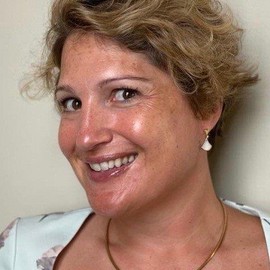
Researchers
Aleksandar Gavric
Univ.Ass. MEng MSc BEngCharlotte Roos R. Verbruggen
Univ.Ass. PhDJonas Max Lindner
Univ.Ass. MSc
Marco Huymajer
Senior Lecturer Dipl.-Ing. BSc
Marianne Schnellmann
Univ.Ass. MScMarion Murzek
Senior Lecturer Mag.a rer.soc.oec.Dr.in rer.soc.oec.
Marion Scholz
Senior Lecturer Dipl.-Ing.inMag.a rer.soc.oec.
Miki Zehetner
Univ.Ass. DI Bakk.rer.soc.oec. MSc