

Gerti Kappel
O.Univ.Prof.in Dipl.-Ing.in
Mag.a Dr.in techn.
Gerti Kappel
- Email: gertrude.kappel@tuwien.ac.at
- Phone: +43-1-58801-18870
- Office: FB0109 (1040 Wien, Erzherzog-Johann-Platz 1)
- About:
Gerti Kappel is full professor at the Institute of Information Systems Engineering at TU Wien, in the Business Informatics Group. Prior to that, from 1993 to 2001, she was a full professor of computer science (database systems) and head of the Department of Information Systems at the Johannes Kepler University Linz.
From 2016 to 2019, she was a member of the dean’s team of the Faculty of Informatics responsible for research, diversity, and financial affairs. Since the beginning of 2020 she acts as the dean of the Faculty of Informatics at TU Wien.
Her current research interests include Model Engineering, Web Engineering, and Process Engineering, with a special emphasis on cyber-physical production systems. Striving for the unity of research and teaching, she co-authored and co-edited among others „UML@Work“ (dpunkt.verlag, 3rd ed, 2005), „UML@Classroom“ (Springer, 2015), and „Web Engineering“ (Wiley, 2006).
- Orcid: 0000-0002-4758-9436
- Keywords: Process Engineering, Data Engineering, Services Engineering, UML and XML, Business Process Management (BPM), Model Engineering, Workflow Management Systems (WFMS), Web Engineering, Object Orientation, Software Engineering
- Roles: Head of Services, Full Professor
Publications
Towards Semantics-Aware Merge Support in Optimistic Model Versioning
 Petra KaufmannUwe EglySebastian GabmeyerMartina SeidlHans TompitsMagdalena WidlManuel Wimmer
Keywords:
Astract: Current optimistic model versioning systems, which are indispensable to coordinate the collaboration within teams, are able to detect several kinds of conflicts between two concurrently modified versions of one model. These systems support the detection of syntactical problems such as contradicting changes, violations of the underlying metamodel, and violations of OCL constraints. However, violations of the models' semantics remain unreported. In this paper, we suggest to use redundant information inherent in multi-view models to check if the semantics is violated during the merge process. In particular, we exploit the information encoded in state machine diagrams to validate evolving sequence diagrams by means of the model checker SPIN.
Kaufmann, P., Egly, U., Gabmeyer, S., Kappel, G., Seidl, M., Tompits, H., Widl, M., & Wimmer, M. (2012). Towards Semantics-Aware Merge Support in Optimistic Model Versioning. In Models in Software Engineering (pp. 246–256). Springer LNCS. https://doi.org/10.1007/978-3-642-29645-1_24
Fact or Fiction - Reuse in Rule-Based Model-to-Model Transformation Languages
Manuel WimmerAngelika KuselWerner RetschitzeggerJohannes SchönböckWieland Schwinger
Wimmer, M., Kappel, G., Kusel, A., Retschitzegger, W., Schönböck, J., & Schwinger, W. (2012). Fact or Fiction - Reuse in Rule-Based Model-to-Model Transformation Languages. In Proceedings of the 5th International Conference on Theory and Practice of Model Transformations (ICMT 2012) (pp. 280–295). Springer. http://hdl.handle.net/20.500.12708/54139
An Introduction to Model Versioning
Petra KaufmannPhilip LangerMartina SeidlKonrad WielandManuel WimmerKeywords:
Astract: With the emergence of model-driven engineering (MDE), software models are considered as central artifacts in the software engineering process, going beyond their traditional use as sketches. In MDE, models rather act as the single source of information for automatically generating executable software. This shift poses several new research challenges. One of these challenges constitutes model versioning, which targets at enabling efficient team-based development of models. This compelling challenge induced a very active research community, who yielded remarkable methods and techniques ranging from model differencing to merging of models.
In this tutorial, we give an introduction to the foundations of model versioning, the underlying technologies for processing models and their evolution, as well as the state of the art in model versioning. Thereby, we aim at equipping students and researchers alike that are new to this domain with enough information for commencing to contribute to this challenging research area.
Kaufmann, P., Kappel, G., Langer, P., Seidl, M., Wieland, K., & Wimmer, M. (2012). An Introduction to Model Versioning. In M. Bernardo, V. Cortellessa, & A. Pierantonio (Eds.), Formal Methods for Model-Driven Engineering (pp. 336–398). Springer. https://doi.org/10.1007/978-3-642-30982-3_10
ERPEL: Enabling Seamless Ad-hoc Cross Enterprise Collaborations
Philipp LieglRainer SchusterHannes WerthnerMario TopfDieter MayrhoferMarco ZapletalPhilipp KrennKeywords:
Astract: In this paper we present the ERPEL approach towards executing on-the-fly e-business transactions between semantically enabled ERP systems. By on-the-fly e-business transactions we understand transactions that are conducted between companies, that are not yet in a partnership and dynamically find each other to engage in e-business transactions. Finding an appropriate business partner requires to know his business capabilities or in other words which products or services he offers. For this purpose, we develop a seamless integration of the product portfolios, held in the ERP systems, into the ERPEL registry. A search in the registry has to disclose the technical capabilities of a potential business partner to ensure interoperability. Overloaded business document standards and a variety of different communication protocols hamper an effective communication between enterprises. Thus, ERPEL follows a bottom-up approach starting from core documents with well-defined extension mechanisms. Furthermore, ERPEL comes with a default communication protocol specifically targeting SMEs. These unambiguous specifications allow the development of business service interfaces (BSI) that are integrated into the ERP systems.
Huemer, C., Kappel, G., Liegl, P., Schuster, R., Werthner, H., Topf, M., Mayrhofer, D., Zapletal, M., & Krenn, P. (2012). ERPEL: Enabling Seamless Ad-hoc Cross Enterprise Collaborations. In Proceedings of the Annual SRII Global Conference 2012. Annual SRII Global Conference 2012, San Jose, United States of America (the). http://hdl.handle.net/20.500.12708/54193
On Formalizing EMF Modeling Operations with Graph Transformations
Petra KaufmannSebastian GabmeyerMartina SeidlKeywords:
Astract: The development of software in accordance with the model-driven engineering paradigm places model transformations at a central position. Desirable yet contradicting properties of model transformations are user-friendliness as offered by by-demonstration approaches and formal conciseness as provided by algebraic graph transformations which is indispensable for verification tasks.
In this paper, we show how to unite the properties of the two different approaches. We employ the state-of-the-art by-demonstration environment EMO to prototype graph transformations by embedding the operations obtained from EMO in the formal framework of graph transformation theory.
Kaufmann, P., Gabmeyer, S., Kappel, G., & Seidl, M. (2012). On Formalizing EMF Modeling Operations with Graph Transformations. In W. Tracz (Ed.), ACM SIGSOFT Software Engineering Notes (p. 8). ACM. http://hdl.handle.net/20.500.12708/54205
Teaching
Seminar for Master Students in Business Informatics
Semester: 2026S; Nr: 180.779; Type: SE; Hours: 1.0; Language: English; View on TISSResearch Seminar
Semester: 2026S; Nr: 188.446; Type: SE; Hours: 2.0; Language: if required in English; View on TISSLiterature Seminar for PhD Students
Semester: 2026S; Nr: 188.512; Type: SE; Hours: 2.0; Language: German; View on TISSBachelor Thesis for Informatics and Business Informatics
Semester: 2026S; Nr: 188.926; Type: PR; Hours: 5.0; Language: if required in English; View on TISSProject in Computer Science 1
Semester: 2026S; Nr: 194.145; Type: PR; Hours: 4.0; Language: if required in English; View on TISSProject in Computer Science 2
Semester: 2026S; Nr: 194.146; Type: PR; Hours: 4.0; Language: if required in English; View on TISSIntroduction to Quantum Algorithms
Semester: 2026S; Nr: 199.022; Type: VU; Hours: 2.0; Language: English; View on TISSSeminar for Master Students in Business Informatics
Semester: 2025W; Nr: 180.779; Type: SE; Hours: 1.0; Language: English; View on TISSResearch Seminar
Semester: 2025W; Nr: 188.446; Type: SE; Hours: 2.0; Language: if required in English; View on TISSLiterature Seminar for PhD Students
Semester: 2025W; Nr: 188.512; Type: SE; Hours: 2.0; Language: German; View on TISSBachelor Thesis for Informatics and Business Informatics
Semester: 2025W; Nr: 188.926; Type: PR; Hours: 5.0; Language: if required in English; View on TISSScientific Research and Writing
Semester: 2025W; Nr: 193.052; Type: SE; Hours: 2.0; Language: German; View on TISSProject in Computer Science 1
Semester: 2025W; Nr: 194.145; Type: PR; Hours: 4.0; Language: if required in English; View on TISSSustainability in Computer Science
Semester: 2025W; Nr: 194.155; Type: VU; Hours: 2.0; Language: English; View on TISSSeminar in Computer Science (Model Engineering)
Semester: 2025W; Nr: 194.198; Type: SE; Hours: 2.0; Language: German; View on TISSProjects
Digitale Kompetenzen @ Parlament
Name: DKP; Title: Digitale Kompetenzen @ Parlament; Begins On: 2021-04-01; Ends On: 2021-09-30; Context: Parlamentsdirektion; View Project WebsiteIFC-Roundtrip und Plangrafiken
Name: IFC-Roundtrip und Plangrafiken; Title: IFC-Roundtrip und Plangrafiken; Begins On: 2019-01-01; Ends On: 2020-06-30; Context: tbw solutions ZT GesmbH; View Project WebsiteVienna Informatics Living Lab
Name: Vienna Informatics Living Lab; Title: Vienna Informatics Living Lab; Begins On: 2018-08-01; Ends On: 2019-07-31; Context: Vienna Business Agency (WAW); View Project WebsiteMulti-Paradigm Modelling for Cyber-Physical Systems (MPM4CPS)
Name: MPM4CPS; Title: Multi-Paradigm Modelling for Cyber-Physical Systems (MPM4CPS); Begins On: 2014-10-01; Ends On: 2019-05-31; Context: European Cooperation in Science and Technology (COST); View Project WebsiteCOSIMO: Collaborative Configuration Systems Integration and Modeling
Name: COSIMO; Title: COSIMO: Collaborative Configuration Systems Integration and Modeling; Begins On: 2014-01-01; Ends On: 2017-05-30; Context: Vienna Business Agency (WAW); View Project WebsiteARTIST: Advanced software-based seRvice provisioning and migraTIon of legacy Software
Name: ARTIST; Title: ARTIST: Advanced software-based seRvice provisioning and migraTIon of legacy Software; Begins On: 2012-10-01; Ends On: 2015-09-30; Context: European Commission; View Project WebsiteDARWIN - Model-driven Development and Evolution of Semantic Infrastructures
Name: DARWIN; Title: DARWIN - Model-driven Development and Evolution of Semantic Infrastructures; Begins On: 2012-03-01; Ends On: 2015-02-28; Context: Austrian Research Promotion Agency (FFG); View Project WebsiteTROPIC: A Framework for Model Transformations on Petri Nets in Color
Name: TROPIC; Title: TROPIC: A Framework for Model Transformations on Petri Nets in Color; Begins On: 2009-03-01; Ends On: 2012-08-31; Context: Austrian Science Fund (FWF); View Project WebsiteAMOR: Adaptable Model Versioning
Name: AMOR; Title: AMOR: Adaptable Model Versioning; Begins On: 2009-02-01; Ends On: 2011-09-30; Context: SparxSystems Software GmbH; View Project WebsiteDevelopment of a WEB-based database for the global administration of CAN-Data
Name: Rosenbauer-DB; Title: Development of a WEB-based database for the global administration of CAN-Data; Begins On: 2008-09-01; Ends On: 2009-04-30; Context: Rosenbauer; View Project WebsiteModel-Driven Web Engineering net
Name: MDWEnet; Title: Model-Driven Web Engineering net; Begins On: 2006-12-01; Ends On: 2010-12-31; Context: Johannes Kepler Universität Linz; View Project WebsiteTRACK and TRADE: Creating a Data Mart for Floating Car Data
Name: TRACK™ Title: TRACK and TRADE: Creating a Data Mart for Floating Car Data; Begins On: 2006-10-01; Ends On: 2008-09-30; Context: European Commission; View Project WebsiteModelCVS: A Semantic Infrastructure for Model-based Tool Integration
Name: ModelCVS; Title: ModelCVS: A Semantic Infrastructure for Model-based Tool Integration; Begins On: 2006-01-01; Ends On: 2007-12-31; Context: ARIKAN Productivity Group GesmbH; View Project WebsiteZELESSA: An Enabler for Real-time Business Intelligence
Name: ZELESSA; Title: ZELESSA: An Enabler for Real-time Business Intelligence; Begins On: 2006-01-01; Ends On: 2007-06-30; Context: Österr. Nationalbibliothek; View Project WebsiteAdmina.at goes Austria
Name: Admina.at; Title: Admina.at goes Austria; Begins On: 2005-12-01; Ends On: 2007-09-30; Context: Federal Ministry of Science and Research (bm:wf); View Project WebsiteWomen's Postgraduate College for Internet Technologies
Name: WIT; Title: Women's Postgraduate College for Internet Technologies; Begins On: 2003-01-01; Ends On: 2007-12-31; Context: European Commission; View Project WebsiteTeam
Business Informatics Group, TU Wien
Professors
Christian Huemer
Ao.Univ.Prof. Mag.rer.soc.oec.Dr.rer.soc.oec.
Dominik Bork
Associate Prof. Dipl.-Wirtsch.Inf.Univ.Dr.rer.pol.
Gerti Kappel
O.Univ.Prof.in Dipl.-Ing.inMag.a Dr.in techn.
Henderik Proper
Univ.Prof. PhD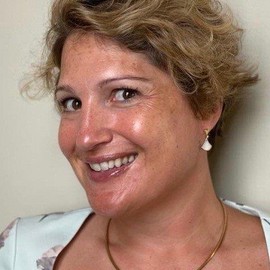


Researchers
Aleksandar Gavric
Univ.Ass. MEng MSc BEngCharlotte Roos R. Verbruggen
Univ.Ass. PhDJonas Max Lindner
Univ.Ass. MSc
Marco Huymajer
Senior Lecturer Dipl.-Ing. BSc
Marianne Schnellmann
Univ.Ass. MScMarion Murzek
Senior Lecturer Mag.a rer.soc.oec.Dr.in rer.soc.oec.
Marion Scholz
Senior Lecturer Dipl.-Ing.inMag.a rer.soc.oec.
Miki Zehetner
Univ.Ass. DI Bakk.rer.soc.oec. MSc