

Gerti Kappel
O.Univ.Prof.in Dipl.-Ing.in
Mag.a Dr.in techn.
Gerti Kappel
- Email: gertrude.kappel@tuwien.ac.at
- Phone: +43-1-58801-18870
- Office: FB0109 (1040 Wien, Erzherzog-Johann-Platz 1)
- About:
Gerti Kappel is full professor at the Institute of Information Systems Engineering at TU Wien, in the Business Informatics Group. Prior to that, from 1993 to 2001, she was a full professor of computer science (database systems) and head of the Department of Information Systems at the Johannes Kepler University Linz.
From 2016 to 2019, she was a member of the dean’s team of the Faculty of Informatics responsible for research, diversity, and financial affairs. Since the beginning of 2020 she acts as the dean of the Faculty of Informatics at TU Wien.
Her current research interests include Model Engineering, Web Engineering, and Process Engineering, with a special emphasis on cyber-physical production systems. Striving for the unity of research and teaching, she co-authored and co-edited among others „UML@Work“ (dpunkt.verlag, 3rd ed, 2005), „UML@Classroom“ (Springer, 2015), and „Web Engineering“ (Wiley, 2006).
- Orcid: 0000-0002-4758-9436
- Keywords: Process Engineering, Data Engineering, Services Engineering, UML and XML, Business Process Management (BPM), Model Engineering, Workflow Management Systems (WFMS), Web Engineering, Object Orientation, Software Engineering
- Roles: Head of Services, Full Professor
Publications
Adaptable Model Versioning in Action
 Petra KaufmannMartina SeidlKonrad WielandManuel WimmerHorst KarglPhilip Langer
Keywords:
Astract: In optimistic versioning, multiple developers are allowed to modify an artifact at the same time. On the one hand this approach increases productivity as the development process is never stalled due to locks on an artifact. On the other hand conflicts may arise when it comes to merging the different modifications into one consolidated version.
In general, the resolution of such conflicts is not only cumbersome, but also error-prone.
Especially if the artifacts under version control are models, little support is provided by standard versioning systems.
In this paper we present the enhanced versioning process of the model versioning system AMOR. We show how AMOR is configured in order to obtain a precise conflict report which allows the recommendation of automatically executable resolution patterns. The user of AMOR chooses either one of the recommendations or performs manual resolution. The manual resolution may be in collaboration with other developers and allows to infer new resolution patterns which may be applied in similar situations.
Kaufmann, P., Kappel, G., Seidl, M., Wieland, K., Wimmer, M., Kargl, H., & Langer, P. (2010). Adaptable Model Versioning in Action. In Modellierung 2010 (pp. 221–236). GI. http://hdl.handle.net/20.500.12708/53107
Keywords:
Astract: During the last decade several approaches have been proposed for easing the burden of writing model transformation rules manually. Among them are Model Transformation By-Demonstration (MTBD) approaches which record actions performed on example models to derive general operations. A current restriction of MTBD is that until now they are only available for in-place transformations, but not for model-to-model (M2M) transformations.
In this paper, we extend our MTBD approach, which is designed for in-place transformations, to also support M2M transformations. In particular, we propose to demonstrate each transformation rule by modeling a source model fragment and a corresponding target model fragment. From these example pairs, the applied edit operations are computed which are input for a semi-automatic process for deriving the general transformation rules. For showing the applicability of the approach, we developed an Eclipse-based prototype supporting the generation of ATL code out of EMF-based example models.
Langer, P., Wimmer, M., & Kappel, G. (2010). Model-to-Model Transformations By Demonstration. In L. Tratt & M. Gogolla (Eds.), Theory and Practice of Model Transformations: Third International Conference, ICMT 2010, Malaga, Spain, June 28-July 2, 2010. Proceedings. Springer. https://doi.org/10.1007/978-3-642-13688-7_11
Surviving the Heterogeneity Jungle with Composite Mapping Operators
Manuel WimmerAngelika KuselWerner RetschitzeggerJohannes SchoenboeckWieland SchwingerKeywords:
Astract: Model transformations play a key role in the vision of Model-Driven Engineering. Nevertheless, mechanisms like abstraction, variation and composition for specifying and applying reusable model transformations - like urgently needed for resolving recurring structural heterogeneities - are insufficiently supported so far. Therefore, we propose to specify model transformations by a set of pre-defined mapping operators (MOps), each resolving a certain kind of structural heterogeneity. Firstly, these MOps can be used in the context of arbitrary metamodels since they abstract from concrete metamodel types. Secondly, MOps can be tailored to resolve certain structural heterogeneities by means of black-box reuse. Thirdly, based on a systematic set of kernel MOps resolving basic heterogeneities, composite ones can be built in order to deal with more complex scenarios. Finally, an extensible library of MOps is proposed, allowing for automatically executable mapping specifications since every MOp exhibits a clearly defined operational semantics.
Wimmer, M., Kappel, G., Kusel, A., Retschitzegger, W., Schoenboeck, J., & Schwinger, W. (2010). Surviving the Heterogeneity Jungle with Composite Mapping Operators. In Theory and Practice of Model Transformations (pp. 260–275). Springer. https://doi.org/10.1007/978-3-642-13688-7_18
Taming the Shrew - Resolving Structural Heterogeneities with Hierarchical CPN
Manuel WimmerAngelika KuselWerner RetschitzeggerJohannes SchönböckWieland SchwingerKeywords:
Astract: Model transformations play a key role in the vision of Model-
Driven Engineering (MDE) whereby the overcoming of structural heterogeneities, being a result of applying different meta-modeling constructs for the same semantic concept, is a challenging, recurring problem, urgently demanding for reuse of transformations. In this respect, an approach is required which (i) abstracts from the concrete execution language allowing to focus on the resolution of structural heterogeneities, (ii) keeps the impedance mismatch between specification and execution low enabling seamless debuggability, and (iii) provides formal underpinnings enabling model checking. Therefore, we propose to specify model transformations by applying a set of abstract mapping operators (MOPs), each resolving a certain kind of structural heterogeneity. For specifying the operational semantics of the MOPs, we propose to use Transformation Nets (TNs), a DSL on top of Colored Petri Nets (CPNs), since it allows (i) to keep the impedance mismatch between specification and execution low and (ii) to analyze model transformations by evaluating behavioral properties of CPNs.
Wimmer, M., Kappel, G., Kusel, A., Retschitzegger, W., Schönböck, J., & Schwinger, W. (2010). Taming the Shrew - Resolving Structural Heterogeneities with Hierarchical CPN. In Proc. of the International Workshop on Petri Nets and Software Engineering PNSE’10 (pp. 141–157). University of Hamburg. http://hdl.handle.net/20.500.12708/53148
TheHiddenU - A Social Nexus for Privacy-Assured Personalisation Brokerage
Johannes SchönböckManuel WimmerGabriele KotsisAngelika KuselBirgit PröllWerner RetschitzeggerWieland SchwingerStephan LechnerKeywords:
Astract: Social networks have seen enormous growth over the past few years, providing also a powerful new channel for distributing personalized services. Personalization, however, is exacerbated because social
content is scattered across different social networks serving specific human needs and social networkers are particularly reluctant to share social content with service providers, if not under their full control. This paper sketches TheHiddenU, a social nexus exploiting semantic techniques for integrating, profiling and
privatising social content, thereby providing the technical prerequisites for personalized brokerage, a new, sustainable business model in the Social Web.
Kappel, G., Schönböck, J., Wimmer, M., Kotsis, G., Kusel, A., Pröll, B., Retschitzegger, W., Schwinger, W., & Lechner, S. (2010). TheHiddenU - A Social Nexus for Privacy-Assured Personalisation Brokerage. In Proceedings of the 12th International Conference of Enterprise Information Systems (ICEIS’2010) (p. 5). INSTICC Press. http://hdl.handle.net/20.500.12708/53149
Teaching
Seminar for Master Students in Business Informatics
Semester: 2026S; Nr: 180.779; Type: SE; Hours: 1.0; Language: English; View on TISSResearch Seminar
Semester: 2026S; Nr: 188.446; Type: SE; Hours: 2.0; Language: if required in English; View on TISSLiterature Seminar for PhD Students
Semester: 2026S; Nr: 188.512; Type: SE; Hours: 2.0; Language: German; View on TISSBachelor Thesis for Informatics and Business Informatics
Semester: 2026S; Nr: 188.926; Type: PR; Hours: 5.0; Language: if required in English; View on TISSProject in Computer Science 1
Semester: 2026S; Nr: 194.145; Type: PR; Hours: 4.0; Language: if required in English; View on TISSProject in Computer Science 2
Semester: 2026S; Nr: 194.146; Type: PR; Hours: 4.0; Language: if required in English; View on TISSIntroduction to Quantum Algorithms
Semester: 2026S; Nr: 199.022; Type: VU; Hours: 2.0; Language: English; View on TISSSeminar for Master Students in Business Informatics
Semester: 2025W; Nr: 180.779; Type: SE; Hours: 1.0; Language: English; View on TISSResearch Seminar
Semester: 2025W; Nr: 188.446; Type: SE; Hours: 2.0; Language: if required in English; View on TISSLiterature Seminar for PhD Students
Semester: 2025W; Nr: 188.512; Type: SE; Hours: 2.0; Language: German; View on TISSBachelor Thesis for Informatics and Business Informatics
Semester: 2025W; Nr: 188.926; Type: PR; Hours: 5.0; Language: if required in English; View on TISSScientific Research and Writing
Semester: 2025W; Nr: 193.052; Type: SE; Hours: 2.0; Language: German; View on TISSProject in Computer Science 1
Semester: 2025W; Nr: 194.145; Type: PR; Hours: 4.0; Language: if required in English; View on TISSSustainability in Computer Science
Semester: 2025W; Nr: 194.155; Type: VU; Hours: 2.0; Language: English; View on TISSSeminar in Computer Science (Model Engineering)
Semester: 2025W; Nr: 194.198; Type: SE; Hours: 2.0; Language: German; View on TISSProjects
Digitale Kompetenzen @ Parlament
Name: DKP; Title: Digitale Kompetenzen @ Parlament; Begins On: 2021-04-01; Ends On: 2021-09-30; Context: Parlamentsdirektion; View Project WebsiteIFC-Roundtrip und Plangrafiken
Name: IFC-Roundtrip und Plangrafiken; Title: IFC-Roundtrip und Plangrafiken; Begins On: 2019-01-01; Ends On: 2020-06-30; Context: tbw solutions ZT GesmbH; View Project WebsiteVienna Informatics Living Lab
Name: Vienna Informatics Living Lab; Title: Vienna Informatics Living Lab; Begins On: 2018-08-01; Ends On: 2019-07-31; Context: Vienna Business Agency (WAW); View Project WebsiteMulti-Paradigm Modelling for Cyber-Physical Systems (MPM4CPS)
Name: MPM4CPS; Title: Multi-Paradigm Modelling for Cyber-Physical Systems (MPM4CPS); Begins On: 2014-10-01; Ends On: 2019-05-31; Context: European Cooperation in Science and Technology (COST); View Project WebsiteCOSIMO: Collaborative Configuration Systems Integration and Modeling
Name: COSIMO; Title: COSIMO: Collaborative Configuration Systems Integration and Modeling; Begins On: 2014-01-01; Ends On: 2017-05-30; Context: Vienna Business Agency (WAW); View Project WebsiteARTIST: Advanced software-based seRvice provisioning and migraTIon of legacy Software
Name: ARTIST; Title: ARTIST: Advanced software-based seRvice provisioning and migraTIon of legacy Software; Begins On: 2012-10-01; Ends On: 2015-09-30; Context: European Commission; View Project WebsiteDARWIN - Model-driven Development and Evolution of Semantic Infrastructures
Name: DARWIN; Title: DARWIN - Model-driven Development and Evolution of Semantic Infrastructures; Begins On: 2012-03-01; Ends On: 2015-02-28; Context: Austrian Research Promotion Agency (FFG); View Project WebsiteTROPIC: A Framework for Model Transformations on Petri Nets in Color
Name: TROPIC; Title: TROPIC: A Framework for Model Transformations on Petri Nets in Color; Begins On: 2009-03-01; Ends On: 2012-08-31; Context: Austrian Science Fund (FWF); View Project WebsiteAMOR: Adaptable Model Versioning
Name: AMOR; Title: AMOR: Adaptable Model Versioning; Begins On: 2009-02-01; Ends On: 2011-09-30; Context: SparxSystems Software GmbH; View Project WebsiteDevelopment of a WEB-based database for the global administration of CAN-Data
Name: Rosenbauer-DB; Title: Development of a WEB-based database for the global administration of CAN-Data; Begins On: 2008-09-01; Ends On: 2009-04-30; Context: Rosenbauer; View Project WebsiteModel-Driven Web Engineering net
Name: MDWEnet; Title: Model-Driven Web Engineering net; Begins On: 2006-12-01; Ends On: 2010-12-31; Context: Johannes Kepler Universität Linz; View Project WebsiteTRACK and TRADE: Creating a Data Mart for Floating Car Data
Name: TRACK™ Title: TRACK and TRADE: Creating a Data Mart for Floating Car Data; Begins On: 2006-10-01; Ends On: 2008-09-30; Context: European Commission; View Project WebsiteModelCVS: A Semantic Infrastructure for Model-based Tool Integration
Name: ModelCVS; Title: ModelCVS: A Semantic Infrastructure for Model-based Tool Integration; Begins On: 2006-01-01; Ends On: 2007-12-31; Context: ARIKAN Productivity Group GesmbH; View Project WebsiteZELESSA: An Enabler for Real-time Business Intelligence
Name: ZELESSA; Title: ZELESSA: An Enabler for Real-time Business Intelligence; Begins On: 2006-01-01; Ends On: 2007-06-30; Context: Österr. Nationalbibliothek; View Project WebsiteAdmina.at goes Austria
Name: Admina.at; Title: Admina.at goes Austria; Begins On: 2005-12-01; Ends On: 2007-09-30; Context: Federal Ministry of Science and Research (bm:wf); View Project WebsiteWomen's Postgraduate College for Internet Technologies
Name: WIT; Title: Women's Postgraduate College for Internet Technologies; Begins On: 2003-01-01; Ends On: 2007-12-31; Context: European Commission; View Project WebsiteTeam
Business Informatics Group, TU Wien
Professors
Christian Huemer
Ao.Univ.Prof. Mag.rer.soc.oec.Dr.rer.soc.oec.
Dominik Bork
Associate Prof. Dipl.-Wirtsch.Inf.Univ.Dr.rer.pol.
Gerti Kappel
O.Univ.Prof.in Dipl.-Ing.inMag.a Dr.in techn.
Henderik Proper
Univ.Prof. PhD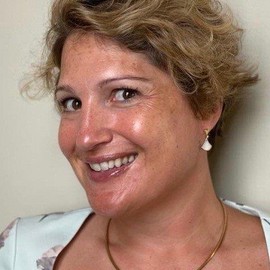


Researchers
Aleksandar Gavric
Univ.Ass. MEng MSc BEngCharlotte Roos R. Verbruggen
Univ.Ass. PhDJonas Max Lindner
Univ.Ass. MSc
Marco Huymajer
Senior Lecturer Dipl.-Ing. BSc
Marianne Schnellmann
Univ.Ass. MScMarion Murzek
Senior Lecturer Mag.a rer.soc.oec.Dr.in rer.soc.oec.
Marion Scholz
Senior Lecturer Dipl.-Ing.inMag.a rer.soc.oec.
Miki Zehetner
Univ.Ass. DI Bakk.rer.soc.oec. MSc