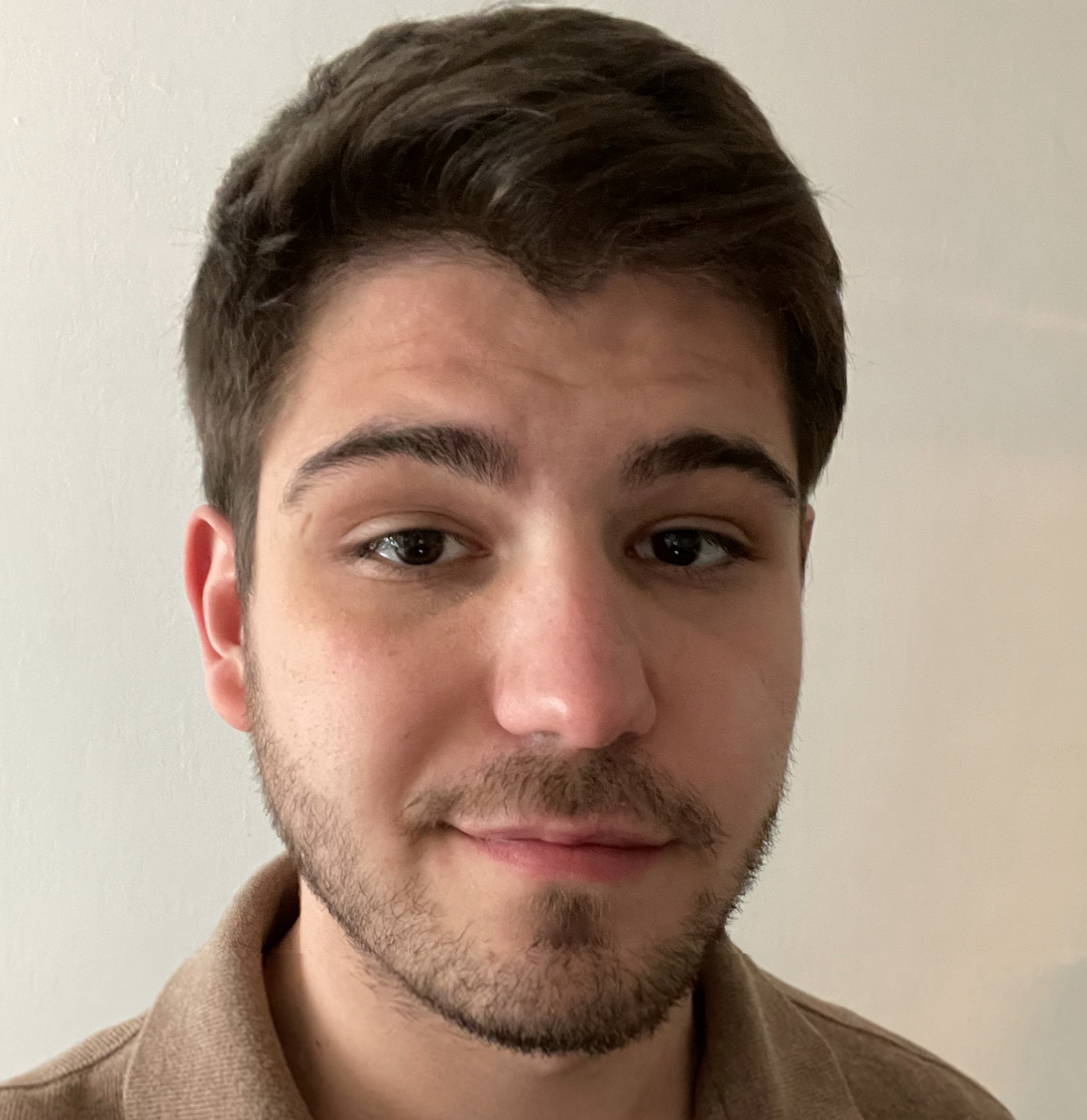

Manuel Wimmer

Privatdoz. Mag.rer.soc.oec. Dr.rer.soc.oec.
Manuel Wimmer
- Email: manuel.wimmer@tuwien.ac.at
- Phone:
- Office: (1040 Wien, Favoritenstrasse 11)
- About: UML, Object-oriented Modeling, Domain-specific Modeling, Metamodeling, Model Transformation, Software Engineering, Web Engineering, Model Engineering, Industrial Engineering, Automation Engineering, Multi-disciplinary Engineering
- Orcid:
- Keywords: Model Driven Engineering, Web Engineering, Model Transformation
- Roles: Affiliated
Publications
Right or Wrong? - Verification of Model Transformations using Colored Petri Nets
Manuel WimmerAngelika KuselWerner RetschitzeggerJohannes SchönböckWieland SchwingerKeywords:
Astract: Model-Driven Engineering (MDE) places models as firstclass
artifacts throughout the software lifecycle requiring the
availability of proper transformation languages. Most of today's
approaches use declarative rules to specify a mapping
between source and target models which is then executed
by a transformation engine. Transformation engines, however,
most often hide the operational semantics of the mapping
and operate on a considerable lower level of abstraction,
thus hampering debugging. To tackle these limitations we
propose a framework called TROPIC (Transformations on
Petri Nets in Color) providing a DSL on top of Colored Petri
Nets (CPNs) to specify, simulate, and formally verify model
transformations. The formal underpinnings of CPNs enables
simulation and veri fication of model transformations.
By exploring the constructed state space of CPNs we show
how prede fined behavioral properties as well as custom state
space functions can be applied for observing and tracking
origins of errors during debugging.
Wimmer, M., Kappel, G., Kusel, A., Retschitzegger, W., Schönböck, J., & Schwinger, W. (2009). Right or Wrong? - Verification of Model Transformations using Colored Petri Nets. In Proceedings of the 9th OOPSLA Workshop on Domain-Specific Modeling (DSM´09). 9th OOPSLA workshop on domain-specific modeling, Orlando, United States of America (the). Helsinki Business School. http://hdl.handle.net/20.500.12708/52798
A Petri Net Based Debugging Environment for QVT Relations
Manuel WimmerJohannes SchoenboeckAngelika KuselWerner RetschitzeggerWieland SchwingerKeywords:
Astract: In the Model-Driven Architecture (MDA) paradigm the Query/View/Transformation (QVT) standard plays a vital role for model transformations. Especially the high-level declarative QVT Relations language, however, has not yet gained widespread use in practice. This is not least due to missing tool support in general and inadequate debugging support in particular. Transformation engines interpreting QVT Relations operate on a low level of abstraction, hide
the operational semantics of a transformation and scatter metamodels, models, QVT code, and trace information across different artifacts.
We therefore propose a model-based debugger representing QVT Relations on bases of TROPIC, a model transformation language utilizing a variant of Colored Petri Nets (CPNs). As a prerequisite for convenient debugging, TROPIC provides a homogeneous view on all artifacts of a transformation on basis of a single formalism. Besides that, this formalism also provides a runtime model, thus making the afore hidden operational semantics of the transformation explicit. Using an explicit runtime model allows to employ model-based techniques for debugging, e.g., using the Object Constraint Language (OCL) for simply defining breakpoints and querying the execution
state of a transformation.
Wimmer, M., Kappel, G., Schoenboeck, J., Kusel, A., Retschitzegger, W., & Schwinger, W. (2009). A Petri Net Based Debugging Environment for QVT Relations. In 2009 IEEE/ACM International Conference on Automated Software Engineering. IEEE International Conference on Automated Software Engineering (ASE), Aukland, New Zealand. IEEE. https://doi.org/10.1109/ase.2009.99
A survey on web modeling approaches for ubiquitous web applications
Wieland SchwingerWerner RetschitzeggerAndrea SchauerhuberManuel WimmerBirgit PröllCristina Castro CacheroSven CasteleynOlga De TroyerPiero FraternaliIrene GarrigosFranca GarzottoAthula GinigeGeert-Jan HoubenNora KochNathalie MorenoOscar PastorPaolo PaoliniVicente Ferragud PelechanoGustavo RossiDaniel SchwabeMassimo TisiAntonio VallecilloKees van der SluijsGefei ZhangKeywords:
Astract: Ubiquitous web applications (UWA) are a new type of web applications which are accessed in various contexts, i.e. through different devices, by users with various interests, at anytime from anyplace around the globe. For such full-fledged, complex software systems, a methodologically sound engineering approach in terms of model-driven engineering (MDE) is crucial. Several modeling approaches have already been proposed that capture the ubiquitous nature of web applications, each of them having different origins, pursuing different goals and providing a pantheon of concepts. This paper aims to give an in-depth comparison of seven modeling approaches supporting the development of UWAs.
This methodology is conducted by applying a detailed set of evaluation criteria and by demonstrating its applicability on basis of an exemplary tourism web application. In particular, five commonly found ubiquitous scenarios are investigated, thus providing initial insight into the modeling concepts of each approach as well as to facilitate their comparability.
The results gained indicate that many modeling approaches lack a proper MDE foundation in terms of meta-models and tool support. The proposed modeling mechanisms for ubiquity are often limited, since they neither cover all relevant context factors in an explicit, self-contained, and extensible way, nor allow for a wide spectrum of extensible adaptation operations. The provided modeling concepts frequently do not allow dealing with all different parts of a web application in terms of its content, hypertext, and presentation levels as well as their structural and behavioral features. Finally, current modeling approaches do not reflect the crosscutting nature of ubiquity but rather intermingle context and adaptation issues with the core parts of a web application, thus hampering maintainability and extensibility.
Different from other surveys in the area of modeling web applications, this paper specifically considers modeling concepts for their ubiquitous nature, together with an investigation of available support for MDD in a comprehensive way, using a well-defined as well as fine-grained catalogue of more than 30 evaluation criteria.
Schwinger, W., Retschitzegger, W., Schauerhuber, A., Kappel, G., Wimmer, M., Pröll, B., Castro Cachero, C., Casteleyn, S., De Troyer, O., Fraternali, P., Garrigos, I., Garzotto, F., Ginige, A., Houben, G.-J., Koch, N., Moreno, N., Pastor, O., Paolini, P., Ferragud Pelechano, V., … Zhang, G. (2008). A survey on web modeling approaches for ubiquitous web applications. International Journal of Web Information Systems, 4(3), 234–305. https://doi.org/10.1108/17440080810901089
How Web 2.0 can leverage Model Engineering in Practice
Manuel WimmerAndrea SchauerhuberMichael StrommerJürgen FlandorferKeywords:
Astract: Today's online model repositories offer to download and view the
textual specifications of e.g. metamodels and models in the
browser. For users, in order to efficiently search a model
repository, a graphical visualization of the stored models is
desirable. First attempts that automatically generate class
diagrams as bitmaps, however, do not scale for large models and
fail to present all information. In this paper, we present our Web
2.0 MetaModelbrowser, a model visualization service which provides
an Ajax-based tree-viewer for efficiently browsing Ecore-based
metamodels and their models. As a main contribution of this work
the MetaModelbrowser is complementary to existing model
repositories in that its visualization service can be integrated
into them. The MetaModelbrowser, furthermore, allows zooming in
and out of the details of arbitrarily sized models as necessary.
Furthermore, we have done some case studies on the one hand how to
extend the MetaModelbrowser, e.g., for creation, update, and
deletion of model elements as well as supporting model weaving,
and on the other hand how to incorporate the MetaModelbrowser in
current versioning systems.
Wimmer, M., Schauerhuber, A., Strommer, M., Flandorfer, J., & Kappel, G. (2008). How Web 2.0 can leverage Model Engineering in Practice. In W. Reisig (Ed.), DSML’08 Workshop @ Modellierung’08 (pp. 31–44). Humboldt-Universität zu Berlin. http://hdl.handle.net/20.500.12708/52157
A Framework for Building Mapping Operators Resolving Structural Heterogeneities
Horst KarglThomas ReiterWerner RetschitzeggerWieland SchwingerMichael StrommerManuel WimmerKeywords:
Astract: Seamless exchange of models among different modeling tools increasingly becomes a crucial prerequisite for the success of modeldriven engineering. Current best practices use model transformation languages to realize necessary mappings between concepts of the metamodels defining the modeling languages supported by different tools. Existing model transformation languages, however, lack appropriate abstraction mechanisms for resolving recurring kinds of structural heterogeneities one has to primarily cope with when creating such mappings.
We propose a framework for building reusable mapping operators which allow the automatic transformation of models. For each mapping operator, the operational semantics is specified on basis of Colored Petri Nets, providing a uniform formalism not only for representing the transformation logic together with the metamodels and the models themselves, but also for executing the transformations, thus facilitating understanding and debugging. To demonstrate the applicability of our approach, we apply the proposed framework for defining a set of mapping operators which are intended to resolve typical structural heterogeneities occurring between the core concepts usually used to define metamodels.
Kappel, G., Kargl, H., Reiter, T., Retschitzegger, W., Schwinger, W., Strommer, M., & Wimmer, M. (2008). A Framework for Building Mapping Operators Resolving Structural Heterogeneities. In R. Kaschek, C. Kop, C. Steinberger, & G. Fliedl (Eds.), Information Systems and e-Business Technologies (pp. 158–174). Springer. https://doi.org/10.1007/978-3-540-78942-0_18
Projects
Multi-Paradigm Modelling for Cyber-Physical Systems (MPM4CPS)
Name: MPM4CPS; Title: Multi-Paradigm Modelling for Cyber-Physical Systems (MPM4CPS); Begins On: 2014-10-01; Ends On: 2019-05-31; Context: European Cooperation in Science and Technology (COST); View Project WebsiteCOSIMO: Collaborative Configuration Systems Integration and Modeling
Name: COSIMO; Title: COSIMO: Collaborative Configuration Systems Integration and Modeling; Begins On: 2014-01-01; Ends On: 2017-05-30; Context: Vienna Business Agency (WAW); View Project WebsiteARTIST: Advanced software-based seRvice provisioning and migraTIon of legacy Software
Name: ARTIST; Title: ARTIST: Advanced software-based seRvice provisioning and migraTIon of legacy Software; Begins On: 2012-10-01; Ends On: 2015-09-30; Context: European Commission; View Project WebsiteTROPIC: A Framework for Model Transformations on Petri Nets in Color
Name: TROPIC; Title: TROPIC: A Framework for Model Transformations on Petri Nets in Color; Begins On: 2009-03-01; Ends On: 2012-08-31; Context: Austrian Science Fund (FWF); View Project WebsiteAMOR: Adaptable Model Versioning
Name: AMOR; Title: AMOR: Adaptable Model Versioning; Begins On: 2009-02-01; Ends On: 2011-09-30; Context: SparxSystems Software GmbH; View Project WebsiteTeam
Business Informatics Group, TU Wien
Professors
Christian Huemer
Ao.Univ.Prof. Mag.rer.soc.oec.Dr.rer.soc.oec.
Dominik Bork
Associate Prof. Dipl.-Wirtsch.Inf.Univ.Dr.rer.pol.
Gerti Kappel
O.Univ.Prof.in Dipl.-Ing.inMag.a Dr.in techn.
Henderik Proper
Univ.Prof. PhD
Researchers
Aleksandar Gavric
Univ.Ass. MEng MSc BEngCharlotte Roos R. Verbruggen
Univ.Ass. PhDJonas Max Lindner
Univ.Ass. MSc
Marco Huymajer
Senior Lecturer Dipl.-Ing. BSc
Marianne Schnellmann
Univ.Ass. MScMarion Murzek
Senior Lecturer Mag.a rer.soc.oec.Dr.in rer.soc.oec.
Marion Scholz
Senior Lecturer Dipl.-Ing.inMag.a rer.soc.oec.
Miki Zehetner
Univ.Ass. DI Bakk.rer.soc.oec. MSc