

Gerti Kappel
O.Univ.Prof.in Dipl.-Ing.in
Mag.a Dr.in techn.
Gerti Kappel
- Email: gertrude.kappel@tuwien.ac.at
- Phone: +43-1-58801-18870
- Office: FB0109 (1040 Wien, Erzherzog-Johann-Platz 1)
- About:
Gerti Kappel is full professor at the Institute of Information Systems Engineering at TU Wien, in the Business Informatics Group. Prior to that, from 1993 to 2001, she was a full professor of computer science (database systems) and head of the Department of Information Systems at the Johannes Kepler University Linz.
From 2016 to 2019, she was a member of the dean’s team of the Faculty of Informatics responsible for research, diversity, and financial affairs. Since the beginning of 2020 she acts as the dean of the Faculty of Informatics at TU Wien.
Her current research interests include Model Engineering, Web Engineering, and Process Engineering, with a special emphasis on cyber-physical production systems. Striving for the unity of research and teaching, she co-authored and co-edited among others „UML@Work“ (dpunkt.verlag, 3rd ed, 2005), „UML@Classroom“ (Springer, 2015), and „Web Engineering“ (Wiley, 2006).
- Orcid: 0000-0002-4758-9436
- Keywords: Process Engineering, Data Engineering, Services Engineering, UML and XML, Business Process Management (BPM), Model Engineering, Workflow Management Systems (WFMS), Web Engineering, Object Orientation, Software Engineering
- Roles: Head of Services, Full Professor
Publications
Plug & Play Model Transformations - A DSL for Resolving Structural Metamodel Heterogeneities
 Manuel WimmerAngelika KuselWerner RetschitzeggerJohannes SchönböckWieland Schwinger
Wimmer, M., Kappel, G., Kusel, A., Retschitzegger, W., Schönböck, J., & Schwinger, W. (2010). Plug & Play Model Transformations - A DSL for Resolving Structural Metamodel Heterogeneities. In Proceedings of the 10th Workshop on Domain-Specific Modeling (DSM´10) @ Splash 2010 (p. 6). Online Publication. http://hdl.handle.net/20.500.12708/53240
A recommender for conflict resolution support in optimistic model versioning
Petra KaufmannMartina SeidlKeywords:
Astract: The usage of optimistic version control systems comes along with cumbersome and time-consuming conflict resolution in the case that the modifications of two developers are contradicting. For code as well as for any other artifact the resolution support moves hardly beyond the choices "keep mine", "keep theirs", "take all changes", or "abandon all changes".
To ease the conflict resolution in the context of model versioning, we propose a recommender system which suggests automatically executable resolution patterns to the developer responsible for the conflict resolution. The lookup algorithm is based on a similarity-aware graph matching approach incorporating information from the metamodel of the used modeling language. This allows not only the retrieval of recommendations exactly matching the given conflict situation, but also the identification of similar conflict situations whose resolution patterns are adaptable to the current conflict.
Kaufmann, P., Seidl, M., & Kappel, G. (2010). A recommender for conflict resolution support in optimistic model versioning. In Proceedings of the ACM international conference companion on Object oriented programming systems languages and applications companion - SPLASH ’10. Onward! 2010, Reno/Tahoe, United States of America (the). ACM. https://doi.org/10.1145/1869542.1869549
Keywords:
Astract: Optimistic version control systems enable globally distributed teams of developers to work together asynchronously. Every developer works on a local copy and consequently, no developer is ever detracted from working by waiting for a resource. The price for this flexibility is payed at the moment when conflicting modifications must be integrated into one consolidated version.
In this paper, we discuss conflicts and their need for resolution in the context of model versioning and provide the basic concepts necessary to build a model versioning system which guides modelers through the critical consolidation phase by recommending suitable patterns.
Kaufmann, P., Wieland, K., & Kappel, G. (2010). Conflict Resolution in Model Versioning. In 1st International Master Class on Model-Driven Engineering, Poster Session Companion (pp. 17–18). http://hdl.handle.net/20.500.12708/53418
SmartMatcher: Improving Automatically Generated Transformations
Horst KarglManuel WimmerMartina SeidlKeywords:
Astract: Model integration is one of the core components for the realization of model-driven engineering. In particular, the seamless exchange of models among different modeling tools is of special importance. This exchange is achieved by the means of model transformations. However, the manual definition of model transformations is an error prone and cumbersome task. So matching techniques, originally intended for database schema integration, have been reused. The result is unsatisfactory as current matching approaches typically produce only one-toone alignments which are inappropriate for many integration problems. As a consequence, a detailed review and a manual post-processing step is often necessary. To tackle these problems, we propose the self-tuning framework SmartMatcher for improving automatically generated transformations. Our approach combines the power of an executable mapping language for bridging structural heterogeneities with the strength of an instance based quality evaluation model. In an iterative, feedback-driven process a mapping between two schemas is constructed and repeatedly enhanced.
Kargl, H., Wimmer, M., Seidl, M., & Kappel, G. (2009). SmartMatcher: Improving Automatically Generated Transformations. Datenbank-Spektrum, 9(29), 42–52. http://hdl.handle.net/20.500.12708/165566
Lost in Translation? Transformation Nets to the Rescue!
Manuel WimmerAngelika KuselThomas ReiterWerner RetschitzeggerWieland SchwingerKeywords:
Astract: The vision of Model-Driven Engineering places models as first-class artifacts throughout the software lifecycle. An essential prerequisite is the availability of proper transformation languages allowing not only code generation but also augmentation, migration or translation of models themselves. Current approaches, however, lack convenient facilities for debugging and ensuring the understanding of the transformation process. To tackle these problems, we propose a novel formalism for the development of model transformations which is based on Colored Petri Nets. This allows first, for an explicit, process-oriented execution model of a transformation, thereby overcoming the impedance mismatch between the specification and execution of model transformations, being the prerequisite for convenient debugging. Second, by providing a homogenous representation of all artifacts involved in a transformation, including metamodels, models and the actual transformation logic itself, understandability of model transformations is enhanced.
Wimmer, M., Kusel, A., Reiter, T., Retschitzegger, W., Schwinger, W., & Kappel, G. (2009). Lost in Translation? Transformation Nets to the Rescue! In J. Yang, A. Ginige, H. C. Mayr, & R.-D. Kutsche (Eds.), Information Systems: Modeling, Development, and Integration (pp. 315–327). Springer. https://doi.org/10.1007/978-3-642-01112-2_33
Teaching
Seminar for Master Students in Business Informatics
Semester: 2026S; Nr: 180.779; Type: SE; Hours: 1.0; Language: English; View on TISSResearch Seminar
Semester: 2026S; Nr: 188.446; Type: SE; Hours: 2.0; Language: if required in English; View on TISSLiterature Seminar for PhD Students
Semester: 2026S; Nr: 188.512; Type: SE; Hours: 2.0; Language: German; View on TISSBachelor Thesis for Informatics and Business Informatics
Semester: 2026S; Nr: 188.926; Type: PR; Hours: 5.0; Language: if required in English; View on TISSProject in Computer Science 1
Semester: 2026S; Nr: 194.145; Type: PR; Hours: 4.0; Language: if required in English; View on TISSProject in Computer Science 2
Semester: 2026S; Nr: 194.146; Type: PR; Hours: 4.0; Language: if required in English; View on TISSIntroduction to Quantum Algorithms
Semester: 2026S; Nr: 199.022; Type: VU; Hours: 2.0; Language: English; View on TISSSeminar for Master Students in Business Informatics
Semester: 2025W; Nr: 180.779; Type: SE; Hours: 1.0; Language: English; View on TISSResearch Seminar
Semester: 2025W; Nr: 188.446; Type: SE; Hours: 2.0; Language: if required in English; View on TISSLiterature Seminar for PhD Students
Semester: 2025W; Nr: 188.512; Type: SE; Hours: 2.0; Language: German; View on TISSBachelor Thesis for Informatics and Business Informatics
Semester: 2025W; Nr: 188.926; Type: PR; Hours: 5.0; Language: if required in English; View on TISSScientific Research and Writing
Semester: 2025W; Nr: 193.052; Type: SE; Hours: 2.0; Language: German; View on TISSProject in Computer Science 1
Semester: 2025W; Nr: 194.145; Type: PR; Hours: 4.0; Language: if required in English; View on TISSSustainability in Computer Science
Semester: 2025W; Nr: 194.155; Type: VU; Hours: 2.0; Language: English; View on TISSSeminar in Computer Science (Model Engineering)
Semester: 2025W; Nr: 194.198; Type: SE; Hours: 2.0; Language: German; View on TISSProjects
Digitale Kompetenzen @ Parlament
Name: DKP; Title: Digitale Kompetenzen @ Parlament; Begins On: 2021-04-01; Ends On: 2021-09-30; Context: Parlamentsdirektion; View Project WebsiteIFC-Roundtrip und Plangrafiken
Name: IFC-Roundtrip und Plangrafiken; Title: IFC-Roundtrip und Plangrafiken; Begins On: 2019-01-01; Ends On: 2020-06-30; Context: tbw solutions ZT GesmbH; View Project WebsiteVienna Informatics Living Lab
Name: Vienna Informatics Living Lab; Title: Vienna Informatics Living Lab; Begins On: 2018-08-01; Ends On: 2019-07-31; Context: Vienna Business Agency (WAW); View Project WebsiteMulti-Paradigm Modelling for Cyber-Physical Systems (MPM4CPS)
Name: MPM4CPS; Title: Multi-Paradigm Modelling for Cyber-Physical Systems (MPM4CPS); Begins On: 2014-10-01; Ends On: 2019-05-31; Context: European Cooperation in Science and Technology (COST); View Project WebsiteCOSIMO: Collaborative Configuration Systems Integration and Modeling
Name: COSIMO; Title: COSIMO: Collaborative Configuration Systems Integration and Modeling; Begins On: 2014-01-01; Ends On: 2017-05-30; Context: Vienna Business Agency (WAW); View Project WebsiteARTIST: Advanced software-based seRvice provisioning and migraTIon of legacy Software
Name: ARTIST; Title: ARTIST: Advanced software-based seRvice provisioning and migraTIon of legacy Software; Begins On: 2012-10-01; Ends On: 2015-09-30; Context: European Commission; View Project WebsiteDARWIN - Model-driven Development and Evolution of Semantic Infrastructures
Name: DARWIN; Title: DARWIN - Model-driven Development and Evolution of Semantic Infrastructures; Begins On: 2012-03-01; Ends On: 2015-02-28; Context: Austrian Research Promotion Agency (FFG); View Project WebsiteTROPIC: A Framework for Model Transformations on Petri Nets in Color
Name: TROPIC; Title: TROPIC: A Framework for Model Transformations on Petri Nets in Color; Begins On: 2009-03-01; Ends On: 2012-08-31; Context: Austrian Science Fund (FWF); View Project WebsiteAMOR: Adaptable Model Versioning
Name: AMOR; Title: AMOR: Adaptable Model Versioning; Begins On: 2009-02-01; Ends On: 2011-09-30; Context: SparxSystems Software GmbH; View Project WebsiteDevelopment of a WEB-based database for the global administration of CAN-Data
Name: Rosenbauer-DB; Title: Development of a WEB-based database for the global administration of CAN-Data; Begins On: 2008-09-01; Ends On: 2009-04-30; Context: Rosenbauer; View Project WebsiteModel-Driven Web Engineering net
Name: MDWEnet; Title: Model-Driven Web Engineering net; Begins On: 2006-12-01; Ends On: 2010-12-31; Context: Johannes Kepler Universität Linz; View Project WebsiteTRACK and TRADE: Creating a Data Mart for Floating Car Data
Name: TRACK™ Title: TRACK and TRADE: Creating a Data Mart for Floating Car Data; Begins On: 2006-10-01; Ends On: 2008-09-30; Context: European Commission; View Project WebsiteModelCVS: A Semantic Infrastructure for Model-based Tool Integration
Name: ModelCVS; Title: ModelCVS: A Semantic Infrastructure for Model-based Tool Integration; Begins On: 2006-01-01; Ends On: 2007-12-31; Context: ARIKAN Productivity Group GesmbH; View Project WebsiteZELESSA: An Enabler for Real-time Business Intelligence
Name: ZELESSA; Title: ZELESSA: An Enabler for Real-time Business Intelligence; Begins On: 2006-01-01; Ends On: 2007-06-30; Context: Österr. Nationalbibliothek; View Project WebsiteAdmina.at goes Austria
Name: Admina.at; Title: Admina.at goes Austria; Begins On: 2005-12-01; Ends On: 2007-09-30; Context: Federal Ministry of Science and Research (bm:wf); View Project WebsiteWomen's Postgraduate College for Internet Technologies
Name: WIT; Title: Women's Postgraduate College for Internet Technologies; Begins On: 2003-01-01; Ends On: 2007-12-31; Context: European Commission; View Project WebsiteTeam
Business Informatics Group, TU Wien
Professors
Christian Huemer
Ao.Univ.Prof. Mag.rer.soc.oec.Dr.rer.soc.oec.
Dominik Bork
Associate Prof. Dipl.-Wirtsch.Inf.Univ.Dr.rer.pol.
Gerti Kappel
O.Univ.Prof.in Dipl.-Ing.inMag.a Dr.in techn.
Henderik Proper
Univ.Prof. PhD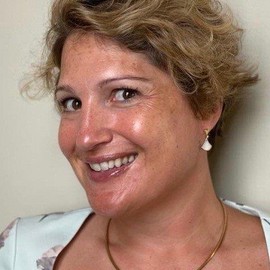


Researchers
Aleksandar Gavric
Univ.Ass. MEng MSc BEngCharlotte Roos R. Verbruggen
Univ.Ass. PhDJonas Max Lindner
Univ.Ass. MSc
Marco Huymajer
Senior Lecturer Dipl.-Ing. BSc
Marianne Schnellmann
Univ.Ass. MScMarion Murzek
Senior Lecturer Mag.a rer.soc.oec.Dr.in rer.soc.oec.
Marion Scholz
Senior Lecturer Dipl.-Ing.inMag.a rer.soc.oec.
Miki Zehetner
Univ.Ass. DI Bakk.rer.soc.oec. MSc