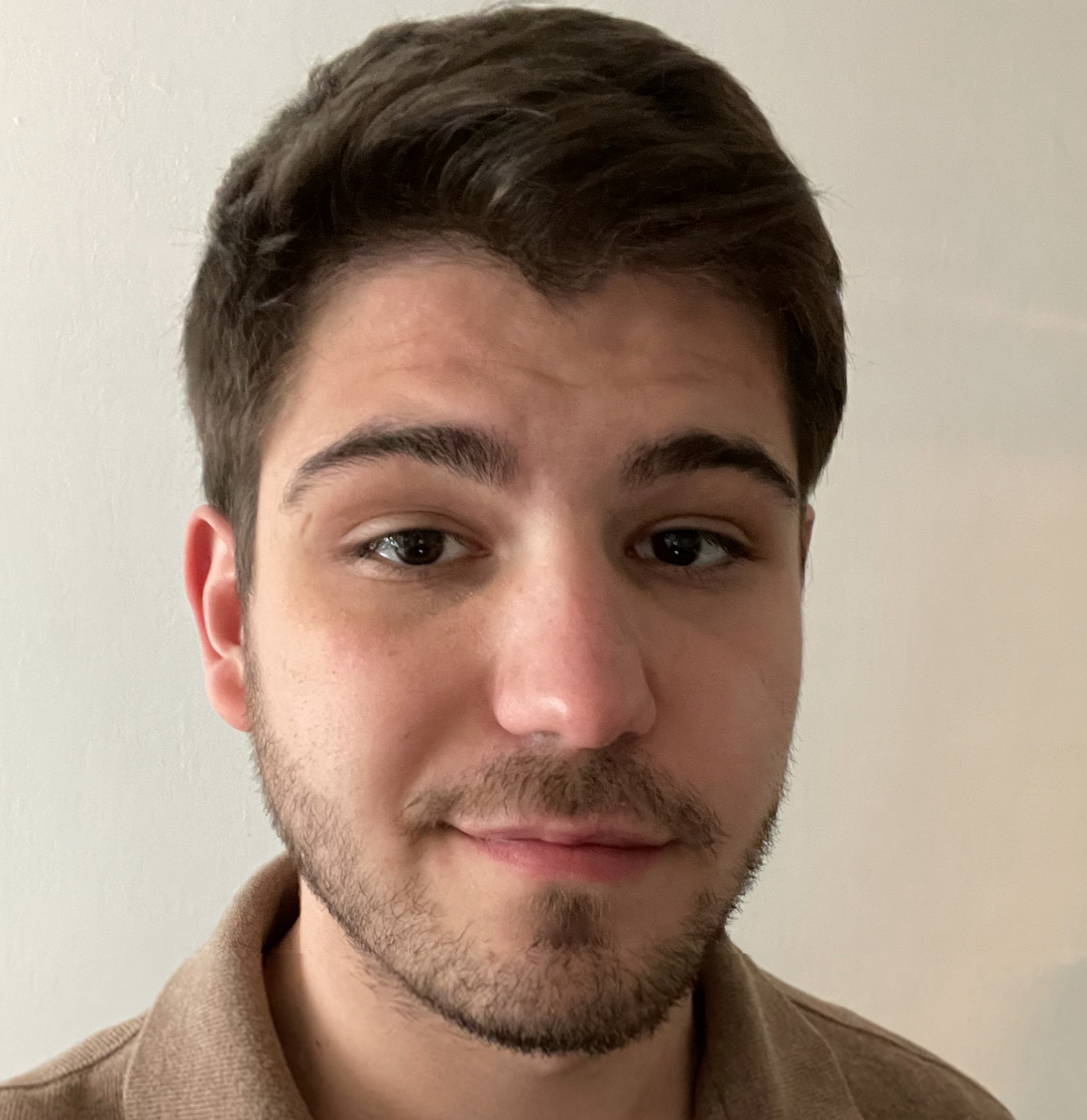

Manuel Wimmer

Privatdoz. Mag.rer.soc.oec. Dr.rer.soc.oec.
Manuel Wimmer
- Email: manuel.wimmer@tuwien.ac.at
- Phone:
- Office: (1040 Wien, Favoritenstrasse 11)
- About: UML, Object-oriented Modeling, Domain-specific Modeling, Metamodeling, Model Transformation, Software Engineering, Web Engineering, Model Engineering, Industrial Engineering, Automation Engineering, Multi-disciplinary Engineering
- Orcid:
- Keywords: Model Driven Engineering, Web Engineering, Model Transformation
- Roles: Affiliated
Publications
A Survey on Web Modeling Approaches for Ubiquitous Web Applications
Andrea SchauerhuberWieland SchwingerWerner RetschitzeggerManuel Wimmer
Schauerhuber, A., Schwinger, W., Retschitzegger, W., Wimmer, M., & Kappel, G. (2007). A Survey on Web Modeling Approaches for Ubiquitous Web Applications. http://hdl.handle.net/20.500.12708/33100
Matching Metamodels with Semantic Systems - An Experience Report
Horst KarglGerhard KramlerAndrea SchauerhuberMartina SeidlMichael StrommerManuel WimmerKeywords:
Astract: Ontology and schema matching are well established techniques, which
have been applied in various integration scenarios, e.g., web service composition and
database integration. Consequently, matching tools enabling automatic matching of
various kinds of schemas with various matching techniques are available. In the field
of model-driven engineering, in contrast to schema and ontology integration, the in-
tegration of modeling languages relies on manual tasks such as writing model trans-
formation code, which is tedious and error-prone. Therefore, we propose the applica-
tion of ontology and schema matching techniques for automatically exploring seman-
tic correspondences between metamodels, which are currently the modeling language
definitions of choice. The main focus of this paper is on reporting preliminary results
and lessons learned by evaluating currently available ontology matching tools for their
metamodel matching potential.
Kappel, G., Kargl, H., Kramler, G., Schauerhuber, A., Seidl, M., Strommer, M., & Wimmer, M. (2007). Matching Metamodels with Semantic Systems - An Experience Report. In Datenbanksysteme in Business, Technologie und Web (BTW 2007), Workshop Proceedings (pp. 38–52). Verlag Mainz. http://hdl.handle.net/20.500.12708/51778
MDWEnet: A Practical Approach to Achieving Interoperability of Model-Driven Web Engineering Methods
Antonio VallecilloNora KochCristina CacheroSara ComaiPiero FraternaliIrene GarrigósJaime GomézAlexander KnappMaristella MateraSantiago MeliáNathalie MorenoBirgit PröllThomas ReiterWerner RetschitzeggerJosé E. RiveraAndrea SchauerhuberWieland SchwingerManuel WimmerGefei ZhangKeywords:
Astract: Current model-driven Web Engineering approaches (such as OO-H,
UWE or WebML) provide a set of methods and supporting tools for a systematic design and development of Web applications. Each method addresses different concerns using separate models (content, navigation, presentation, business logic, etc.), and provide model compilers that produce most of the logic and Web pages of the application from these models. However, these proposals
also have some limitations, especially for exchanging models or representing further modeling concerns, such as architectural styles, technology independence, or distribution. A possible solution to these issues is provided by making model-driven Web Engineering proposals interoperate, being able to complement each other, and to exchange models between the different tools.
MDWEnet is a recent initiative started by a small group of researchers working on model-driven Web Engineering (MDWE). Its goal is to improve current practices and tools for the model-driven development of Web applications for better interoperability. The proposal is based on the strengths of current model-driven Web Engineering methods, and the existing experience and knowledge in the field. This paper presents the background, motivation, scope, and objectives of MDWEnet. Furthermore, it reports on the MDWEnet results and achievements so far, and its future plan of actions.
Vallecillo, A., Koch, N., Cachero, C., Comai, S., Fraternali, P., Garrigós, I., Goméz, J., Kappel, G., Knapp, A., Matera, M., Meliá, S., Moreno, N., Pröll, B., Reiter, T., Retschitzegger, W., Rivera, J. E., Schauerhuber, A., Schwinger, W., Wimmer, M., & Zhang, G. (2007). MDWEnet: A Practical Approach to Achieving Interoperability of Model-Driven Web Engineering Methods. In 7th International Conference on Web Engineering, Workshop Proceedings (pp. 246–254). Dipartimento di Elettronica e Informazione, Politecnico di Milano, Italy. http://hdl.handle.net/20.500.12708/51881
A Semi-automatic Approach for Bridging DSLs with UML
Manuel WimmerAndrea SchauerhuberMichael StrommerWieland SchwingerKeywords:
Astract: The definition of modeling languages is a key-prerequisite for model-driven engineering (MDE). In this respect, domain-specific languages (DSL) defined in terms of metamodels and UML profiles are often considered as two alternatives. For interoperability reasons, however, the need arises to bridge modeling languages originally defined as DSLs to UML profiles by defining (1) a specific UML profile to represent the domain-specific modeling concepts in UML and (2) model transformations for transforming DSL models to UML models and vice versa. A manual definition of a UML profile typically is a tedious and errorprone task, but contains a high potential for automation. The contribution of this paper is to integrate the so far competing worlds of DSLs and UML. We report on our semi-automatic approach based on the manual mapping of domain-specific metamodels and UML using a dedicated bridging language as well as the automatic generation of UML profiles and model transformations. We present our ideas within a case study for bridging ComputerAssociate´s DSL of the AllFusion Gen CASE tool with IBM´s Rational Software Modeler for UML.
Wimmer, M., Schauerhuber, A., Strommer, M., Schwinger, W., & Kappel, G. (2007). A Semi-automatic Approach for Bridging DSLs with UML. In J. Sprinkle, J.-P. Tolvanen, J. Gray, & M. Rossi (Eds.), Proceedings of the 7th OOPSLA Workshop on Domain-Specific Modeling (DSM´07) (pp. 97–104). Computer Science and Information System Reports, University of Jyväskylä, Finland. http://hdl.handle.net/20.500.12708/51887
On Models and Ontologies - A Semantic Infrastructure Supporting Model Integration
Horst KarglManuel WimmerElisabeth KapsammerGerhard KramlerThomas ReiterWerner RetschitzeggerWieland SchwingerKeywords:
Astract: The exchange of models among different modeling tools ever more
becomes an important prerequisite for effective software development
processes. Due to a lack of interoperability, however, it is often difficult to use
tools in combination, thus the potential of model-driven software development
cannot be fully exploited. This paper proposes ModelCVS, a system which
enables tool integration through transparent transformation of models between
different tools´ modeling languages expressed as MOF-based metamodels.
ModelCVS provides versioning capabilities exploiting the rich syntax and
semantics of models. Concurrent development is enabled by storing and
versioning software artifacts that clients can access by a check-in/check-out
mechanism, similar to a traditional CVS server. Semantic technologies in terms
of ontologies are used together with a knowledge base to store machine-
readable, tool integration relevant information, thus allowing to minimize
repetitive effort and partly automate the integration process.
Kappel, G., Kargl, H., Wimmer, M., Kapsammer, E., Kramler, G., Reiter, T., Retschitzegger, W., & Schwinger, W. (2006). On Models and Ontologies - A Semantic Infrastructure Supporting Model Integration. In Modellierung 2006, 22.-24. Maerz 2006, Innsbruck, Tirol, Austria (pp. 11–27). LNI. http://hdl.handle.net/20.500.12708/51427
Projects
Multi-Paradigm Modelling for Cyber-Physical Systems (MPM4CPS)
Name: MPM4CPS; Title: Multi-Paradigm Modelling for Cyber-Physical Systems (MPM4CPS); Begins On: 2014-10-01; Ends On: 2019-05-31; Context: European Cooperation in Science and Technology (COST); View Project WebsiteCOSIMO: Collaborative Configuration Systems Integration and Modeling
Name: COSIMO; Title: COSIMO: Collaborative Configuration Systems Integration and Modeling; Begins On: 2014-01-01; Ends On: 2017-05-30; Context: Vienna Business Agency (WAW); View Project WebsiteARTIST: Advanced software-based seRvice provisioning and migraTIon of legacy Software
Name: ARTIST; Title: ARTIST: Advanced software-based seRvice provisioning and migraTIon of legacy Software; Begins On: 2012-10-01; Ends On: 2015-09-30; Context: European Commission; View Project WebsiteTROPIC: A Framework for Model Transformations on Petri Nets in Color
Name: TROPIC; Title: TROPIC: A Framework for Model Transformations on Petri Nets in Color; Begins On: 2009-03-01; Ends On: 2012-08-31; Context: Austrian Science Fund (FWF); View Project WebsiteAMOR: Adaptable Model Versioning
Name: AMOR; Title: AMOR: Adaptable Model Versioning; Begins On: 2009-02-01; Ends On: 2011-09-30; Context: SparxSystems Software GmbH; View Project WebsiteTeam
Business Informatics Group, TU Wien
Professors
Christian Huemer
Ao.Univ.Prof. Mag.rer.soc.oec.Dr.rer.soc.oec.
Dominik Bork
Associate Prof. Dipl.-Wirtsch.Inf.Univ.Dr.rer.pol.
Gerti Kappel
O.Univ.Prof.in Dipl.-Ing.inMag.a Dr.in techn.
Henderik Proper
Univ.Prof. PhD
Researchers
Aleksandar Gavric
Univ.Ass. MEng MSc BEngCharlotte Roos R. Verbruggen
Univ.Ass. PhDJonas Max Lindner
Univ.Ass. MSc
Marco Huymajer
Senior Lecturer Dipl.-Ing. BSc
Marianne Schnellmann
Univ.Ass. MScMarion Murzek
Senior Lecturer Mag.a rer.soc.oec.Dr.in rer.soc.oec.
Marion Scholz
Senior Lecturer Dipl.-Ing.inMag.a rer.soc.oec.
Miki Zehetner
Univ.Ass. DI Bakk.rer.soc.oec. MSc