

Gerti Kappel
O.Univ.Prof.in Dipl.-Ing.in
Mag.a Dr.in techn.
Gerti Kappel
- Email: gertrude.kappel@tuwien.ac.at
- Phone: +43-1-58801-18870
- Office: FB0109 (1040 Wien, Erzherzog-Johann-Platz 1)
- About:
Gerti Kappel is full professor at the Institute of Information Systems Engineering at TU Wien, in the Business Informatics Group. Prior to that, from 1993 to 2001, she was a full professor of computer science (database systems) and head of the Department of Information Systems at the Johannes Kepler University Linz.
From 2016 to 2019, she was a member of the dean’s team of the Faculty of Informatics responsible for research, diversity, and financial affairs. Since the beginning of 2020 she acts as the dean of the Faculty of Informatics at TU Wien.
Her current research interests include Model Engineering, Web Engineering, and Process Engineering, with a special emphasis on cyber-physical production systems. Striving for the unity of research and teaching, she co-authored and co-edited among others „UML@Work“ (dpunkt.verlag, 3rd ed, 2005), „UML@Classroom“ (Springer, 2015), and „Web Engineering“ (Wiley, 2006).
- Orcid: 0000-0002-4758-9436
- Keywords: Process Engineering, Data Engineering, Services Engineering, UML and XML, Business Process Management (BPM), Model Engineering, Workflow Management Systems (WFMS), Web Engineering, Object Orientation, Software Engineering
- Roles: Head of Services, Full Professor
Publications
Contents for a Model-Based Software Engineering Body of Knowledge
 Loli BurgueñoFederico CiccozziMichalis FamelisLeen LambersSebastien MosserRichard F. PaigeAlfonso PierantonioArend RensinkRick SalayGabriele TaentzerAntonio VallecilloManuel Wimmer
Keywords:
Astract: Although Model-Based Software Engineering (MBE) is a widely accepted Software Engineering (SE) discipline, no agreed-upon core set of concepts and practices (i.e., a Body of Knowledge) has been defined for it yet. With the goals of characterizing the contents of the MBE discipline, promoting a global consistent view of it, clarifying its scope with regard to other SE disciplines, and defining a foundation for the development of educational curricula on MBE, this paper proposes the contents for a Body of Knowledge for MBE. We also describe the methodology that we have used to come up with the proposed list of contents, as well as the results of a survey study that we conducted to sound out the opinion of the community on the importance of the proposed topics and their level of coverage in the existing SE curricula.
Burgueño, L., Ciccozzi, F., Famelis, M., Kappel, G., Lambers, L., Mosser, S., Paige, R. F., Pierantonio, A., Rensink, A., Salay, R., Taentzer, G., Vallecillo, A., & Wimmer, M. (2019). Contents for a Model-Based Software Engineering Body of Knowledge. Software and Systems Modeling, 18(6), 3193–3205. https://doi.org/10.1007/s10270-019-00746-9
CPS/IoT Ecosystem: A Platform for Research and Education
Haris IsakovicDenise RatasichChristian HirschMichael PlatzerBernhard WallyThomas RauschDejan NickovicWillibald KrennSchahram DustdarRadu GrosuKeywords:
Astract: The CPS/IoT Ecosystem project aims to build an IoT infrastructure that will be used as a platform for research and education in multiple disciplines related to CPS and IoT. The main objective is to provide a real-world infrastructure, and allow students and researchers explore its capabilities on actual use cases.
Isakovic, H., Ratasich, D., Hirsch, C., Platzer, M., Wally, B., Rausch, T., Nickovic, D., Krenn, W., Kappel, G., Dustdar, S., & Grosu, R. (2019). CPS/IoT Ecosystem: A Platform for Research and Education. In R. Chamberlain, W. Taha, & M. Törngren (Eds.), Cyber Physical Systems. Model-Based Design (pp. 206–213). Springer International Publishing. https://doi.org/10.1007/978-3-030-23703-5_12
Cognitive Decision Support for Industrial Product Life Cycles: A Position Paper
Stefan ThalmannHeimo GurschJosef SuschniggMilot GashiHelmut EnnsbrunnerAnna Katharina FuchsTobias SchreckBelgin MutluJürgen ManglerStefanie LindstaedtKeywords:
Astract: Current trends in manufacturing lead to more intelligent
products, produced in global supply chains in shorter cycles,
taking more and complex requirements into account. To manage
this increasing complexity, cognitive decision support systems,
building on data analytic approaches and focusing on the product
life cycle, stages seem a promising approach. With two high-tech
companies (world market leader in their domains) from Austria,
we are approaching this challenge and jointly develop cognitive
decision support systems for three real world industrial use cases.
Within this position paper, we introduce our understanding of
cognitive decision support and we introduce three industrial use
cases, focusing on the requirements for cognitive decision support.
Finally, we describe our preliminary solution approach for each
use case and our next steps
Thalmann, S., Gursch, H., Suschnigg, J., Gashi, M., Ennsbrunner, H., Fuchs, A. K., Schreck, T., Mutlu, B., Mangler, J., Kappel, G., Huemer, C., & Lindstaedt, S. (2019). Cognitive Decision Support for Industrial Product Life Cycles: A Position Paper. In Proceedings of the Eleventh International Conference on Advanced Cognitive Technologies and Applications (COGNITIVE 2019) (pp. 3–9). IARIA. http://hdl.handle.net/20.500.12708/57850
Sensyml: Simulation Environment for large-scale IoT Applications
Haris IsakovicRadu GrosuBernhard WallyThomas RauschSchahram DustdarDenise RatasichVanja BisanovicKeywords:
Astract: IoT systems are becoming an increasingly important component of the civil and industrial infrastructure. With the growth of these IoT ecosystems, their complexity is also growing exponentially. In this paper we explore the problem of testing and evaluating large scale IoT systems at design time. To this end we employ simulated sensors with the physical and geographical characteristics of real sensors. Moreover, we propose Sensyml, a simulation environment that is capable of generating big data from cyber-physical models and real-world data. To the best of our knowledge it is the first approach to use a hybrid integration of real and simulated sensor data, that is also capable of being integrated into existing IoT systems. Sensyml is a cloud based Infrastructure-as-a-Service (IaaS) system that enables users to test both functionality and scalability of their IoT applications.
Isakovic, H., Grosu, R., Wally, B., Rausch, T., Dustdar, S., Kappel, G., Ratasich, D., & Bisanovic, V. (2019). Sensyml: Simulation Environment for large-scale IoT Applications. In IECON 2019 - 45th Annual Conference of the IEEE Industrial Electronics Society. 45th Annual Conference of the IEEE Industrial Electronics Society (IECON 2019), Lisbon, Portugal. IEEE Xplore. https://doi.org/10.1109/iecon.2019.8927756
Leveraging annotation-based modeling with JUMP
Alexander BergmayrMichael GrossniklausManuel WimmerKeywords: Java annotations, UML profiles, Model-based software engineering, Forward engineering, Reverse engineering
Astract: The capability of UML profiles to serve as annotation mechanism has been recognized in both research and industry. Today’s modeling tools offer profiles specific to platforms, such as Java, as they facilitate model-based engineering approaches. However, considering the large number of possible annotations in Java, manually developing the corresponding profiles would only be achievable by huge development and maintenance efforts. Thus, leveraging annotation-based modeling requires an automated approach capable of generating platform-specific profiles from Java libraries. To address this challenge, we present the fully automated transformation chain realized by Jump, thereby continuing existing mapping efforts between Java and UML by emphasizing on annotations and profiles. The evaluation of Jump shows that it scales for large Java libraries and generates profiles of equal or even improved quality compared to profiles currently used in practice. Furthermore, we demonstrate the practical value of Jump by contributing profiles that facilitate reverse engineering and forward engineering processes for the Java platform by applying it to a modernization scenario.
Bergmayr, A., Grossniklaus, M., Wimmer, M., & Kappel, G. (2018). Leveraging annotation-based modeling with JUMP. Software and Systems Modeling. https://doi.org/10.1007/s10270-016-0528-y
Teaching
Seminar for Master Students in Business Informatics
Semester: 2026S; Nr: 180.779; Type: SE; Hours: 1.0; Language: English; View on TISSResearch Seminar
Semester: 2026S; Nr: 188.446; Type: SE; Hours: 2.0; Language: if required in English; View on TISSLiterature Seminar for PhD Students
Semester: 2026S; Nr: 188.512; Type: SE; Hours: 2.0; Language: German; View on TISSBachelor Thesis for Informatics and Business Informatics
Semester: 2026S; Nr: 188.926; Type: PR; Hours: 5.0; Language: if required in English; View on TISSProject in Computer Science 1
Semester: 2026S; Nr: 194.145; Type: PR; Hours: 4.0; Language: if required in English; View on TISSProject in Computer Science 2
Semester: 2026S; Nr: 194.146; Type: PR; Hours: 4.0; Language: if required in English; View on TISSIntroduction to Quantum Algorithms
Semester: 2026S; Nr: 199.022; Type: VU; Hours: 2.0; Language: English; View on TISSSeminar for Master Students in Business Informatics
Semester: 2025W; Nr: 180.779; Type: SE; Hours: 1.0; Language: English; View on TISSResearch Seminar
Semester: 2025W; Nr: 188.446; Type: SE; Hours: 2.0; Language: if required in English; View on TISSLiterature Seminar for PhD Students
Semester: 2025W; Nr: 188.512; Type: SE; Hours: 2.0; Language: German; View on TISSBachelor Thesis for Informatics and Business Informatics
Semester: 2025W; Nr: 188.926; Type: PR; Hours: 5.0; Language: if required in English; View on TISSScientific Research and Writing
Semester: 2025W; Nr: 193.052; Type: SE; Hours: 2.0; Language: German; View on TISSProject in Computer Science 1
Semester: 2025W; Nr: 194.145; Type: PR; Hours: 4.0; Language: if required in English; View on TISSSustainability in Computer Science
Semester: 2025W; Nr: 194.155; Type: VU; Hours: 2.0; Language: English; View on TISSSeminar in Computer Science (Model Engineering)
Semester: 2025W; Nr: 194.198; Type: SE; Hours: 2.0; Language: German; View on TISSProjects
Digitale Kompetenzen @ Parlament
Name: DKP; Title: Digitale Kompetenzen @ Parlament; Begins On: 2021-04-01; Ends On: 2021-09-30; Context: Parlamentsdirektion; View Project WebsiteIFC-Roundtrip und Plangrafiken
Name: IFC-Roundtrip und Plangrafiken; Title: IFC-Roundtrip und Plangrafiken; Begins On: 2019-01-01; Ends On: 2020-06-30; Context: tbw solutions ZT GesmbH; View Project WebsiteVienna Informatics Living Lab
Name: Vienna Informatics Living Lab; Title: Vienna Informatics Living Lab; Begins On: 2018-08-01; Ends On: 2019-07-31; Context: Vienna Business Agency (WAW); View Project WebsiteMulti-Paradigm Modelling for Cyber-Physical Systems (MPM4CPS)
Name: MPM4CPS; Title: Multi-Paradigm Modelling for Cyber-Physical Systems (MPM4CPS); Begins On: 2014-10-01; Ends On: 2019-05-31; Context: European Cooperation in Science and Technology (COST); View Project WebsiteCOSIMO: Collaborative Configuration Systems Integration and Modeling
Name: COSIMO; Title: COSIMO: Collaborative Configuration Systems Integration and Modeling; Begins On: 2014-01-01; Ends On: 2017-05-30; Context: Vienna Business Agency (WAW); View Project WebsiteARTIST: Advanced software-based seRvice provisioning and migraTIon of legacy Software
Name: ARTIST; Title: ARTIST: Advanced software-based seRvice provisioning and migraTIon of legacy Software; Begins On: 2012-10-01; Ends On: 2015-09-30; Context: European Commission; View Project WebsiteDARWIN - Model-driven Development and Evolution of Semantic Infrastructures
Name: DARWIN; Title: DARWIN - Model-driven Development and Evolution of Semantic Infrastructures; Begins On: 2012-03-01; Ends On: 2015-02-28; Context: Austrian Research Promotion Agency (FFG); View Project WebsiteTROPIC: A Framework for Model Transformations on Petri Nets in Color
Name: TROPIC; Title: TROPIC: A Framework for Model Transformations on Petri Nets in Color; Begins On: 2009-03-01; Ends On: 2012-08-31; Context: Austrian Science Fund (FWF); View Project WebsiteAMOR: Adaptable Model Versioning
Name: AMOR; Title: AMOR: Adaptable Model Versioning; Begins On: 2009-02-01; Ends On: 2011-09-30; Context: SparxSystems Software GmbH; View Project WebsiteDevelopment of a WEB-based database for the global administration of CAN-Data
Name: Rosenbauer-DB; Title: Development of a WEB-based database for the global administration of CAN-Data; Begins On: 2008-09-01; Ends On: 2009-04-30; Context: Rosenbauer; View Project WebsiteModel-Driven Web Engineering net
Name: MDWEnet; Title: Model-Driven Web Engineering net; Begins On: 2006-12-01; Ends On: 2010-12-31; Context: Johannes Kepler Universität Linz; View Project WebsiteTRACK and TRADE: Creating a Data Mart for Floating Car Data
Name: TRACK™ Title: TRACK and TRADE: Creating a Data Mart for Floating Car Data; Begins On: 2006-10-01; Ends On: 2008-09-30; Context: European Commission; View Project WebsiteModelCVS: A Semantic Infrastructure for Model-based Tool Integration
Name: ModelCVS; Title: ModelCVS: A Semantic Infrastructure for Model-based Tool Integration; Begins On: 2006-01-01; Ends On: 2007-12-31; Context: ARIKAN Productivity Group GesmbH; View Project WebsiteZELESSA: An Enabler for Real-time Business Intelligence
Name: ZELESSA; Title: ZELESSA: An Enabler for Real-time Business Intelligence; Begins On: 2006-01-01; Ends On: 2007-06-30; Context: Österr. Nationalbibliothek; View Project WebsiteAdmina.at goes Austria
Name: Admina.at; Title: Admina.at goes Austria; Begins On: 2005-12-01; Ends On: 2007-09-30; Context: Federal Ministry of Science and Research (bm:wf); View Project WebsiteWomen's Postgraduate College for Internet Technologies
Name: WIT; Title: Women's Postgraduate College for Internet Technologies; Begins On: 2003-01-01; Ends On: 2007-12-31; Context: European Commission; View Project WebsiteTeam
Business Informatics Group, TU Wien
Professors
Christian Huemer
Ao.Univ.Prof. Mag.rer.soc.oec.Dr.rer.soc.oec.
Dominik Bork
Associate Prof. Dipl.-Wirtsch.Inf.Univ.Dr.rer.pol.
Gerti Kappel
O.Univ.Prof.in Dipl.-Ing.inMag.a Dr.in techn.
Henderik Proper
Univ.Prof. PhD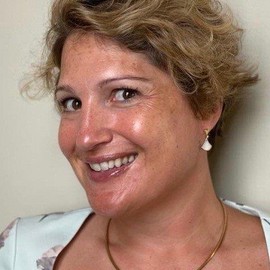

Researchers
Aleksandar Gavric
Univ.Ass. MEng MSc BEngCharlotte Roos R. Verbruggen
Univ.Ass. PhDJonas Max Lindner
Univ.Ass. MSc
Marco Huymajer
Senior Lecturer Dipl.-Ing. BSc
Marianne Schnellmann
Univ.Ass. MScMarion Murzek
Senior Lecturer Mag.a rer.soc.oec.Dr.in rer.soc.oec.
Marion Scholz
Senior Lecturer Dipl.-Ing.inMag.a rer.soc.oec.
Miki Zehetner
Univ.Ass. DI Bakk.rer.soc.oec. MSc