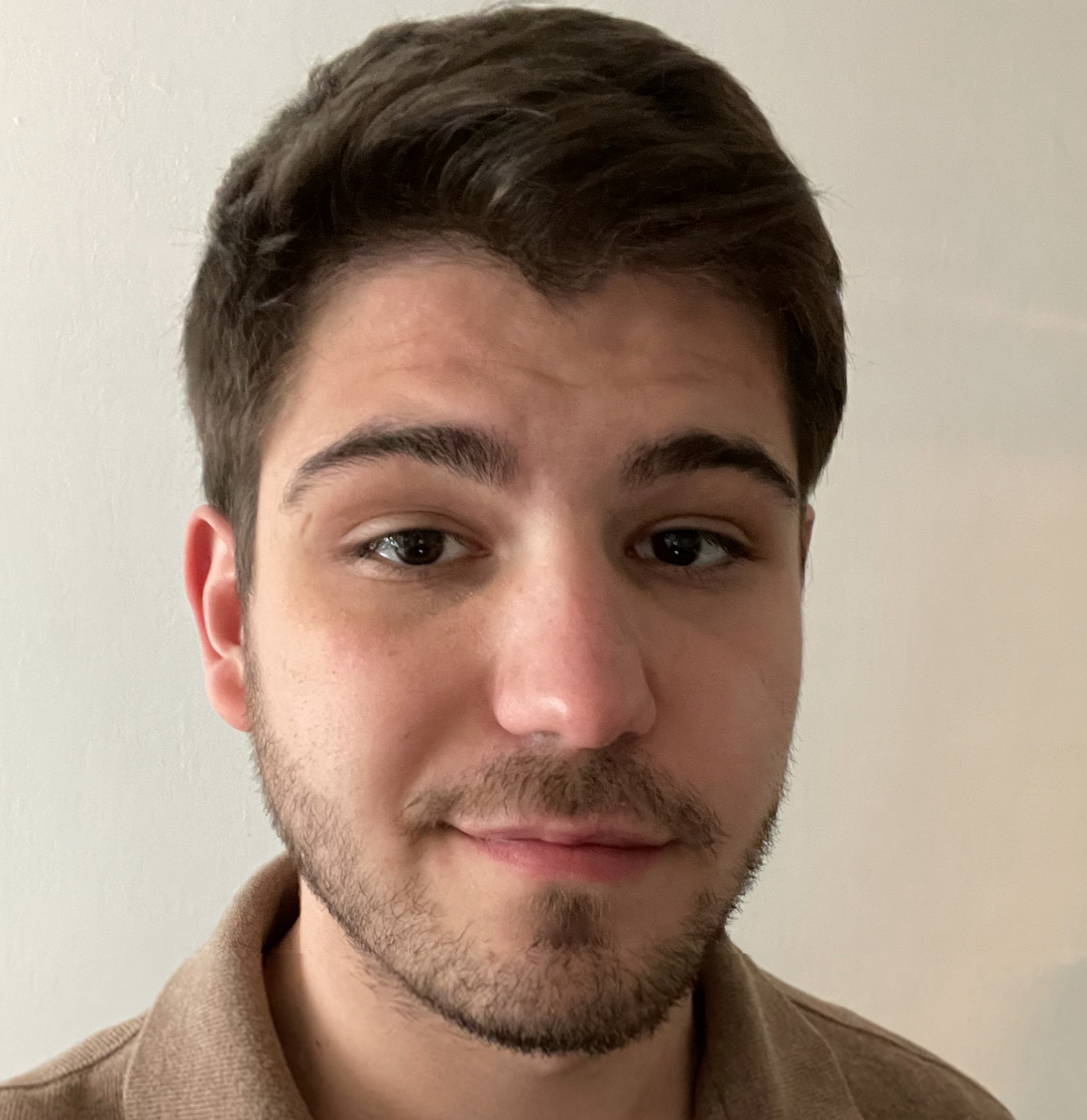

Gerti Kappel
O.Univ.Prof.in Dipl.-Ing.in
Mag.a Dr.in techn.
Gerti Kappel
- Email: gertrude.kappel@tuwien.ac.at
- Phone: +43-1-58801-18870
- Office: FB0109 (1040 Wien, Erzherzog-Johann-Platz 1)
- About:
Gerti Kappel is full professor at the Institute of Information Systems Engineering at TU Wien, in the Business Informatics Group. Prior to that, from 1993 to 2001, she was a full professor of computer science (database systems) and head of the Department of Information Systems at the Johannes Kepler University Linz.
From 2016 to 2019, she was a member of the dean’s team of the Faculty of Informatics responsible for research, diversity, and financial affairs. Since the beginning of 2020 she acts as the dean of the Faculty of Informatics at TU Wien.
Her current research interests include Model Engineering, Web Engineering, and Process Engineering, with a special emphasis on cyber-physical production systems. Striving for the unity of research and teaching, she co-authored and co-edited among others „UML@Work“ (dpunkt.verlag, 3rd ed, 2005), „UML@Classroom“ (Springer, 2015), and „Web Engineering“ (Wiley, 2006).
- Orcid: 0000-0002-4758-9436
- Keywords: Process Engineering, Data Engineering, Services Engineering, UML and XML, Business Process Management (BPM), Model Engineering, Workflow Management Systems (WFMS), Web Engineering, Object Orientation, Software Engineering
- Roles: Head of Services, Full Professor
Publications
How Web 2.0 can leverage Model Engineering in Practice
 Manuel WimmerAndrea SchauerhuberMichael StrommerJürgen Flandorfer
Keywords:
Astract: Today's online model repositories offer to download and view the
textual specifications of e.g. metamodels and models in the
browser. For users, in order to efficiently search a model
repository, a graphical visualization of the stored models is
desirable. First attempts that automatically generate class
diagrams as bitmaps, however, do not scale for large models and
fail to present all information. In this paper, we present our Web
2.0 MetaModelbrowser, a model visualization service which provides
an Ajax-based tree-viewer for efficiently browsing Ecore-based
metamodels and their models. As a main contribution of this work
the MetaModelbrowser is complementary to existing model
repositories in that its visualization service can be integrated
into them. The MetaModelbrowser, furthermore, allows zooming in
and out of the details of arbitrarily sized models as necessary.
Furthermore, we have done some case studies on the one hand how to
extend the MetaModelbrowser, e.g., for creation, update, and
deletion of model elements as well as supporting model weaving,
and on the other hand how to incorporate the MetaModelbrowser in
current versioning systems.
Wimmer, M., Schauerhuber, A., Strommer, M., Flandorfer, J., & Kappel, G. (2008). How Web 2.0 can leverage Model Engineering in Practice. In W. Reisig (Ed.), DSML’08 Workshop @ Modellierung’08 (pp. 31–44). Humboldt-Universität zu Berlin. http://hdl.handle.net/20.500.12708/52157
A Framework for Building Mapping Operators Resolving Structural Heterogeneities
Horst KarglThomas ReiterWerner RetschitzeggerWieland SchwingerMichael StrommerManuel WimmerKeywords:
Astract: Seamless exchange of models among different modeling tools increasingly becomes a crucial prerequisite for the success of modeldriven engineering. Current best practices use model transformation languages to realize necessary mappings between concepts of the metamodels defining the modeling languages supported by different tools. Existing model transformation languages, however, lack appropriate abstraction mechanisms for resolving recurring kinds of structural heterogeneities one has to primarily cope with when creating such mappings.
We propose a framework for building reusable mapping operators which allow the automatic transformation of models. For each mapping operator, the operational semantics is specified on basis of Colored Petri Nets, providing a uniform formalism not only for representing the transformation logic together with the metamodels and the models themselves, but also for executing the transformations, thus facilitating understanding and debugging. To demonstrate the applicability of our approach, we apply the proposed framework for defining a set of mapping operators which are intended to resolve typical structural heterogeneities occurring between the core concepts usually used to define metamodels.
Kappel, G., Kargl, H., Reiter, T., Retschitzegger, W., Schwinger, W., Strommer, M., & Wimmer, M. (2008). A Framework for Building Mapping Operators Resolving Structural Heterogeneities. In R. Kaschek, C. Kop, C. Steinberger, & G. Fliedl (Eds.), Information Systems and e-Business Technologies (pp. 158–174). Springer. https://doi.org/10.1007/978-3-540-78942-0_18
Teaching Models @ BIG - How to Give 1000 Students an Understanding of the UML
Martina SeidlManuel WimmerKeywords:
Astract: In this paper, we report our experiences on teaching the Unifi ed Modeling Language in the large. More precisely, about 1000 computer science and business informatics students attend our course Object-Oriented Modeling each year. Requiring a profound understanding of the
UML, many advanced courses like Software Engineering or Model Engineering build on the knowledge imparted by our course.
In order to achieve our ambitious teaching targets, we establish personal mentoring despite the mass enhanced with e-learning facilities.
Scholz, M., Seidl, M., Wimmer, M., Huemer, C., & Kappel, G. (2008). Teaching Models @ BIG - How to Give 1000 Students an Understanding of the UML. In M. Śmiałek (Ed.), Promoting Software Modeling Through Active Education, Educators Symposium Models’08 (pp. 64–68). Warsaw University of Technology. http://hdl.handle.net/20.500.12708/52264
AMOR - Towards Adaptable Model Versioning
Kerstin AltmanningerAngelika KuselWerner RetschitzeggerMartina SeidlWieland SchwingerManuel WimmerKeywords:
Astract: The development of complex software systems requires appropriate
abstraction mechanisms in terms of model-driven engineering techniques
(MDE) and proper support for allowing developers to work in parallel in terms of version control systems (VCSs). For realizing the vision of MDE, a bundle of standards has been made available recently, whereas the versioning of models has not gained the necessary attention yet, although being of paramount importance for the success of MDE in practice.
In this paper, we propose a first vision of AMOR (Adaptable Model
Versioning) to leverage version control in the area of MDE. The innovations of AMOR are threefold. Firstly, AMOR supports precise conflict detection, i.e., previously undetected as well as wrongly indicated conflicts shall be avoided.
Secondly, AMOR focuses on intelligent conflict resolution by providing
techniques for the representation of conflicting modifications as well as suggesting proper resolution strategies. Thirdly, AMOR targets an adaptable versioning framework, empowering modelers to flexibly balance between reasonable adaptation effort and proper versioning support while ensuring generic applicability to various domain-specific modeling languages and associated tools.
Altmanninger, K., Kappel, G., Kusel, A., Retschitzegger, W., Seidl, M., Schwinger, W., & Wimmer, M. (2008). AMOR - Towards Adaptable Model Versioning. In 1st Int. Workshop on Model Co-Evolution and Consistency Management, in conjunction with Models’08 (p. 7). http://hdl.handle.net/20.500.12708/52277
Exercises for Object-Oriented Modeling
Martina SeidlManuel Wimmer
Scholz, M., Seidl, M., Wimmer, M., Huemer, C., & Kappel, G. (2008). Exercises for Object-Oriented Modeling. Educators Symposium @ MODELS 2008, Toulouse, Frankreich, EU. http://hdl.handle.net/20.500.12708/84744
Teaching
Seminar for Master Students in Business Informatics
Semester: 2026S; Nr: 180.779; Type: SE; Hours: 1.0; Language: English; View on TISSResearch Seminar
Semester: 2026S; Nr: 188.446; Type: SE; Hours: 2.0; Language: if required in English; View on TISSLiterature Seminar for PhD Students
Semester: 2026S; Nr: 188.512; Type: SE; Hours: 2.0; Language: German; View on TISSBachelor Thesis for Informatics and Business Informatics
Semester: 2026S; Nr: 188.926; Type: PR; Hours: 5.0; Language: if required in English; View on TISSProject in Computer Science 1
Semester: 2026S; Nr: 194.145; Type: PR; Hours: 4.0; Language: if required in English; View on TISSProject in Computer Science 2
Semester: 2026S; Nr: 194.146; Type: PR; Hours: 4.0; Language: if required in English; View on TISSIntroduction to Quantum Algorithms
Semester: 2026S; Nr: 199.022; Type: VU; Hours: 2.0; Language: English; View on TISSSeminar for Master Students in Business Informatics
Semester: 2025W; Nr: 180.779; Type: SE; Hours: 1.0; Language: English; View on TISSResearch Seminar
Semester: 2025W; Nr: 188.446; Type: SE; Hours: 2.0; Language: if required in English; View on TISSLiterature Seminar for PhD Students
Semester: 2025W; Nr: 188.512; Type: SE; Hours: 2.0; Language: German; View on TISSBachelor Thesis for Informatics and Business Informatics
Semester: 2025W; Nr: 188.926; Type: PR; Hours: 5.0; Language: if required in English; View on TISSScientific Research and Writing
Semester: 2025W; Nr: 193.052; Type: SE; Hours: 2.0; Language: German; View on TISSProject in Computer Science 1
Semester: 2025W; Nr: 194.145; Type: PR; Hours: 4.0; Language: if required in English; View on TISSSustainability in Computer Science
Semester: 2025W; Nr: 194.155; Type: VU; Hours: 2.0; Language: English; View on TISSSeminar in Computer Science (Model Engineering)
Semester: 2025W; Nr: 194.198; Type: SE; Hours: 2.0; Language: German; View on TISSProjects
Digitale Kompetenzen @ Parlament
Name: DKP; Title: Digitale Kompetenzen @ Parlament; Begins On: 2021-04-01; Ends On: 2021-09-30; Context: Parlamentsdirektion; View Project WebsiteIFC-Roundtrip und Plangrafiken
Name: IFC-Roundtrip und Plangrafiken; Title: IFC-Roundtrip und Plangrafiken; Begins On: 2019-01-01; Ends On: 2020-06-30; Context: tbw solutions ZT GesmbH; View Project WebsiteVienna Informatics Living Lab
Name: Vienna Informatics Living Lab; Title: Vienna Informatics Living Lab; Begins On: 2018-08-01; Ends On: 2019-07-31; Context: Vienna Business Agency (WAW); View Project WebsiteMulti-Paradigm Modelling for Cyber-Physical Systems (MPM4CPS)
Name: MPM4CPS; Title: Multi-Paradigm Modelling for Cyber-Physical Systems (MPM4CPS); Begins On: 2014-10-01; Ends On: 2019-05-31; Context: European Cooperation in Science and Technology (COST); View Project WebsiteCOSIMO: Collaborative Configuration Systems Integration and Modeling
Name: COSIMO; Title: COSIMO: Collaborative Configuration Systems Integration and Modeling; Begins On: 2014-01-01; Ends On: 2017-05-30; Context: Vienna Business Agency (WAW); View Project WebsiteARTIST: Advanced software-based seRvice provisioning and migraTIon of legacy Software
Name: ARTIST; Title: ARTIST: Advanced software-based seRvice provisioning and migraTIon of legacy Software; Begins On: 2012-10-01; Ends On: 2015-09-30; Context: European Commission; View Project WebsiteDARWIN - Model-driven Development and Evolution of Semantic Infrastructures
Name: DARWIN; Title: DARWIN - Model-driven Development and Evolution of Semantic Infrastructures; Begins On: 2012-03-01; Ends On: 2015-02-28; Context: Austrian Research Promotion Agency (FFG); View Project WebsiteTROPIC: A Framework for Model Transformations on Petri Nets in Color
Name: TROPIC; Title: TROPIC: A Framework for Model Transformations on Petri Nets in Color; Begins On: 2009-03-01; Ends On: 2012-08-31; Context: Austrian Science Fund (FWF); View Project WebsiteAMOR: Adaptable Model Versioning
Name: AMOR; Title: AMOR: Adaptable Model Versioning; Begins On: 2009-02-01; Ends On: 2011-09-30; Context: SparxSystems Software GmbH; View Project WebsiteDevelopment of a WEB-based database for the global administration of CAN-Data
Name: Rosenbauer-DB; Title: Development of a WEB-based database for the global administration of CAN-Data; Begins On: 2008-09-01; Ends On: 2009-04-30; Context: Rosenbauer; View Project WebsiteModel-Driven Web Engineering net
Name: MDWEnet; Title: Model-Driven Web Engineering net; Begins On: 2006-12-01; Ends On: 2010-12-31; Context: Johannes Kepler Universität Linz; View Project WebsiteTRACK and TRADE: Creating a Data Mart for Floating Car Data
Name: TRACK™ Title: TRACK and TRADE: Creating a Data Mart for Floating Car Data; Begins On: 2006-10-01; Ends On: 2008-09-30; Context: European Commission; View Project WebsiteModelCVS: A Semantic Infrastructure for Model-based Tool Integration
Name: ModelCVS; Title: ModelCVS: A Semantic Infrastructure for Model-based Tool Integration; Begins On: 2006-01-01; Ends On: 2007-12-31; Context: ARIKAN Productivity Group GesmbH; View Project WebsiteZELESSA: An Enabler for Real-time Business Intelligence
Name: ZELESSA; Title: ZELESSA: An Enabler for Real-time Business Intelligence; Begins On: 2006-01-01; Ends On: 2007-06-30; Context: Österr. Nationalbibliothek; View Project WebsiteAdmina.at goes Austria
Name: Admina.at; Title: Admina.at goes Austria; Begins On: 2005-12-01; Ends On: 2007-09-30; Context: Federal Ministry of Science and Research (bm:wf); View Project WebsiteWomen's Postgraduate College for Internet Technologies
Name: WIT; Title: Women's Postgraduate College for Internet Technologies; Begins On: 2003-01-01; Ends On: 2007-12-31; Context: European Commission; View Project WebsiteTeam
Business Informatics Group, TU Wien
Professors
Christian Huemer
Ao.Univ.Prof. Mag.rer.soc.oec.Dr.rer.soc.oec.
Dominik Bork
Associate Prof. Dipl.-Wirtsch.Inf.Univ.Dr.rer.pol.
Gerti Kappel
O.Univ.Prof.in Dipl.-Ing.inMag.a Dr.in techn.
Henderik Proper
Univ.Prof. PhD
Researchers
Aleksandar Gavric
Univ.Ass. MEng MSc BEngCharlotte Roos R. Verbruggen
Univ.Ass. PhDJonas Max Lindner
Univ.Ass. MSc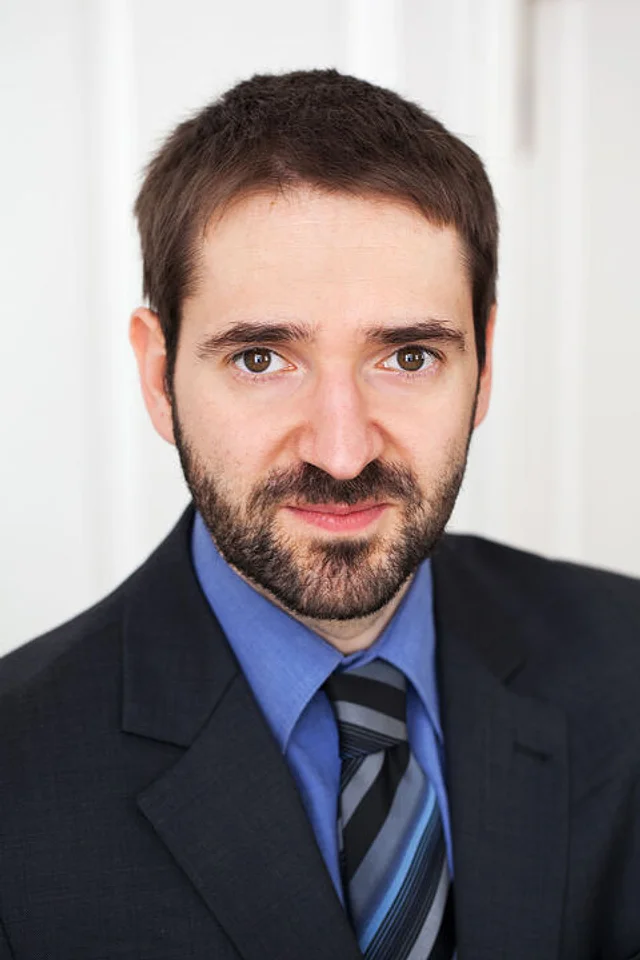
Marco Huymajer
Senior Lecturer Dipl.-Ing. BSc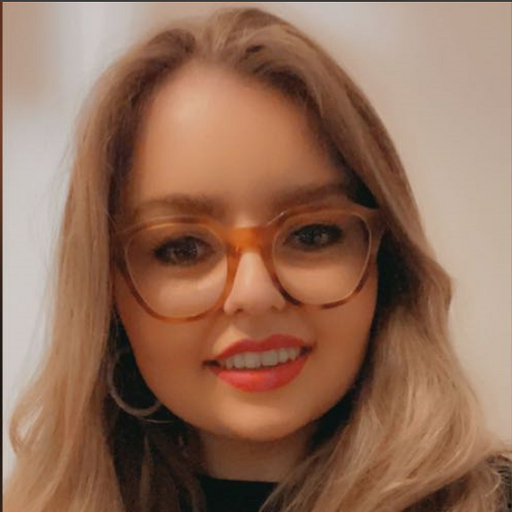
Marianne Schnellmann
Univ.Ass. MScMarion Murzek
Senior Lecturer Mag.a rer.soc.oec.Dr.in rer.soc.oec.
Marion Scholz
Senior Lecturer Dipl.-Ing.inMag.a rer.soc.oec.
Miki Zehetner
Univ.Ass. DI Bakk.rer.soc.oec. MSc