

Gerti Kappel
O.Univ.Prof.in Dipl.-Ing.in
Mag.a Dr.in techn.
Gerti Kappel
- Email: gertrude.kappel@tuwien.ac.at
- Phone: +43-1-58801-18870
- Office: FB0109 (1040 Wien, Erzherzog-Johann-Platz 1)
- About:
Gerti Kappel is full professor at the Institute of Information Systems Engineering at TU Wien, in the Business Informatics Group. Prior to that, from 1993 to 2001, she was a full professor of computer science (database systems) and head of the Department of Information Systems at the Johannes Kepler University Linz.
From 2016 to 2019, she was a member of the dean’s team of the Faculty of Informatics responsible for research, diversity, and financial affairs. Since the beginning of 2020 she acts as the dean of the Faculty of Informatics at TU Wien.
Her current research interests include Model Engineering, Web Engineering, and Process Engineering, with a special emphasis on cyber-physical production systems. Striving for the unity of research and teaching, she co-authored and co-edited among others „UML@Work“ (dpunkt.verlag, 3rd ed, 2005), „UML@Classroom“ (Springer, 2015), and „Web Engineering“ (Wiley, 2006).
- Orcid: 0000-0002-4758-9436
- Keywords: Process Engineering, Data Engineering, Services Engineering, UML and XML, Business Process Management (BPM), Model Engineering, Workflow Management Systems (WFMS), Web Engineering, Object Orientation, Software Engineering
- Roles: Head of Services, Full Professor
Publications
Keywords:
Astract: This paper presents SemAnt, a distributed content-based routing algorithm based on the Ant Colony Optimization meta-heuristic and adapted for deployment in peer-to-peer networks. Under the assumption that the shared content in the network is annotated according to a taxonomy, it is possible to determine the hierarchical relationships between queries, and to exploit this information to improve the routing process. The experimental results presented in this paper show that the performance of content-based peer-to-peer search is highly dependent on the content distribution in the network and on the network's topology. It can be improved by exploiting the information provided by the underlying taxonomy. The degree of improvement is proportional to the degree of coherence in the content distribution.
Michlmayr, E., Pany, A., & Kappel, G. (2007). Using Taxonomies for Content-based Routing with Ants. Computer Networks, 51(16), 4514–4528. https://doi.org/10.1016/j.comnet.2007.06.015
A Survey on Aspect-Oriented Modeling Approaches
 Andrea SchauerhuberWieland SchwingerElisabeth KapsammerWerner RetschitzeggerManuel Wimmer
Keywords:
Astract: Aspect-orientation provides a new way of modularization
by clearly separating crosscutting concerns from non-crosscutting ones. While aspect-orientation originally has emerged at the programming level, it now stretches also over other development phases. There are, for example, already several proposals to Aspect-Oriented Modeling (AOM), most of them pursuing distinguished goals, providing different concepts as well as notations, and showing various levels of maturity. Consequently, there is an urgent need for both, academia and practice, to provide an in-depth survey, clearly identifying commonalities and differences between current AOM approaches. Existing surveys in this area focus more on comprehensibility with respect to development phases or evaluated approaches rather than on comparability at a fine-grained level.
This paper tries to fill this gap. As a prerequisite for an in-depth evaluation, a conceptual reference model is presented, capturing the basic concepts of AOM and their interrelationships in terms of a UML class diagram. Based on this conceptual reference model, an evaluation framework has been designed by deriving a detailed and well-defined catalog of evaluation criteria. The actual evaluation by means of this criteria catalog and by employing a running example is done on the basis of a carefully selected set of eight AOM approaches, each of them having already reached a certain level of maturity. This per approach evaluation is complemented with an extensive report on lessons learned, summarizing the approaches´ strengths and shortcomings.
Schauerhuber, A., Schwinger, W., Kapsammer, E., Retschitzegger, W., Wimmer, M., & Kappel, G. (2007). A Survey on Aspect-Oriented Modeling Approaches. http://hdl.handle.net/20.500.12708/33099
A Survey on Web Modeling Approaches for Ubiquitous Web Applications
Andrea SchauerhuberWieland SchwingerWerner RetschitzeggerManuel Wimmer
Schauerhuber, A., Schwinger, W., Retschitzegger, W., Wimmer, M., & Kappel, G. (2007). A Survey on Web Modeling Approaches for Ubiquitous Web Applications. http://hdl.handle.net/20.500.12708/33100
Matching Metamodels with Semantic Systems - An Experience Report
Horst KarglGerhard KramlerAndrea SchauerhuberMartina SeidlMichael StrommerManuel WimmerKeywords:
Astract: Ontology and schema matching are well established techniques, which
have been applied in various integration scenarios, e.g., web service composition and
database integration. Consequently, matching tools enabling automatic matching of
various kinds of schemas with various matching techniques are available. In the field
of model-driven engineering, in contrast to schema and ontology integration, the in-
tegration of modeling languages relies on manual tasks such as writing model trans-
formation code, which is tedious and error-prone. Therefore, we propose the applica-
tion of ontology and schema matching techniques for automatically exploring seman-
tic correspondences between metamodels, which are currently the modeling language
definitions of choice. The main focus of this paper is on reporting preliminary results
and lessons learned by evaluating currently available ontology matching tools for their
metamodel matching potential.
Kappel, G., Kargl, H., Kramler, G., Schauerhuber, A., Seidl, M., Strommer, M., & Wimmer, M. (2007). Matching Metamodels with Semantic Systems - An Experience Report. In Datenbanksysteme in Business, Technologie und Web (BTW 2007), Workshop Proceedings (pp. 38–52). Verlag Mainz. http://hdl.handle.net/20.500.12708/51778
MDWEnet: A Practical Approach to Achieving Interoperability of Model-Driven Web Engineering Methods
Antonio VallecilloNora KochCristina CacheroSara ComaiPiero FraternaliIrene GarrigósJaime GomézAlexander KnappMaristella MateraSantiago MeliáNathalie MorenoBirgit PröllThomas ReiterWerner RetschitzeggerJosé E. RiveraAndrea SchauerhuberWieland SchwingerManuel WimmerGefei ZhangKeywords:
Astract: Current model-driven Web Engineering approaches (such as OO-H,
UWE or WebML) provide a set of methods and supporting tools for a systematic design and development of Web applications. Each method addresses different concerns using separate models (content, navigation, presentation, business logic, etc.), and provide model compilers that produce most of the logic and Web pages of the application from these models. However, these proposals
also have some limitations, especially for exchanging models or representing further modeling concerns, such as architectural styles, technology independence, or distribution. A possible solution to these issues is provided by making model-driven Web Engineering proposals interoperate, being able to complement each other, and to exchange models between the different tools.
MDWEnet is a recent initiative started by a small group of researchers working on model-driven Web Engineering (MDWE). Its goal is to improve current practices and tools for the model-driven development of Web applications for better interoperability. The proposal is based on the strengths of current model-driven Web Engineering methods, and the existing experience and knowledge in the field. This paper presents the background, motivation, scope, and objectives of MDWEnet. Furthermore, it reports on the MDWEnet results and achievements so far, and its future plan of actions.
Vallecillo, A., Koch, N., Cachero, C., Comai, S., Fraternali, P., Garrigós, I., Goméz, J., Kappel, G., Knapp, A., Matera, M., Meliá, S., Moreno, N., Pröll, B., Reiter, T., Retschitzegger, W., Rivera, J. E., Schauerhuber, A., Schwinger, W., Wimmer, M., & Zhang, G. (2007). MDWEnet: A Practical Approach to Achieving Interoperability of Model-Driven Web Engineering Methods. In 7th International Conference on Web Engineering, Workshop Proceedings (pp. 246–254). Dipartimento di Elettronica e Informazione, Politecnico di Milano, Italy. http://hdl.handle.net/20.500.12708/51881
Teaching
Seminar for Master Students in Business Informatics
Semester: 2026S; Nr: 180.779; Type: SE; Hours: 1.0; Language: English; View on TISSResearch Seminar
Semester: 2026S; Nr: 188.446; Type: SE; Hours: 2.0; Language: if required in English; View on TISSLiterature Seminar for PhD Students
Semester: 2026S; Nr: 188.512; Type: SE; Hours: 2.0; Language: German; View on TISSBachelor Thesis for Informatics and Business Informatics
Semester: 2026S; Nr: 188.926; Type: PR; Hours: 5.0; Language: if required in English; View on TISSProject in Computer Science 1
Semester: 2026S; Nr: 194.145; Type: PR; Hours: 4.0; Language: if required in English; View on TISSProject in Computer Science 2
Semester: 2026S; Nr: 194.146; Type: PR; Hours: 4.0; Language: if required in English; View on TISSIntroduction to Quantum Algorithms
Semester: 2026S; Nr: 199.022; Type: VU; Hours: 2.0; Language: English; View on TISSSeminar for Master Students in Business Informatics
Semester: 2025W; Nr: 180.779; Type: SE; Hours: 1.0; Language: English; View on TISSResearch Seminar
Semester: 2025W; Nr: 188.446; Type: SE; Hours: 2.0; Language: if required in English; View on TISSLiterature Seminar for PhD Students
Semester: 2025W; Nr: 188.512; Type: SE; Hours: 2.0; Language: German; View on TISSBachelor Thesis for Informatics and Business Informatics
Semester: 2025W; Nr: 188.926; Type: PR; Hours: 5.0; Language: if required in English; View on TISSScientific Research and Writing
Semester: 2025W; Nr: 193.052; Type: SE; Hours: 2.0; Language: German; View on TISSProject in Computer Science 1
Semester: 2025W; Nr: 194.145; Type: PR; Hours: 4.0; Language: if required in English; View on TISSSustainability in Computer Science
Semester: 2025W; Nr: 194.155; Type: VU; Hours: 2.0; Language: English; View on TISSSeminar in Computer Science (Model Engineering)
Semester: 2025W; Nr: 194.198; Type: SE; Hours: 2.0; Language: German; View on TISSProjects
Digitale Kompetenzen @ Parlament
Name: DKP; Title: Digitale Kompetenzen @ Parlament; Begins On: 2021-04-01; Ends On: 2021-09-30; Context: Parlamentsdirektion; View Project WebsiteIFC-Roundtrip und Plangrafiken
Name: IFC-Roundtrip und Plangrafiken; Title: IFC-Roundtrip und Plangrafiken; Begins On: 2019-01-01; Ends On: 2020-06-30; Context: tbw solutions ZT GesmbH; View Project WebsiteVienna Informatics Living Lab
Name: Vienna Informatics Living Lab; Title: Vienna Informatics Living Lab; Begins On: 2018-08-01; Ends On: 2019-07-31; Context: Vienna Business Agency (WAW); View Project WebsiteMulti-Paradigm Modelling for Cyber-Physical Systems (MPM4CPS)
Name: MPM4CPS; Title: Multi-Paradigm Modelling for Cyber-Physical Systems (MPM4CPS); Begins On: 2014-10-01; Ends On: 2019-05-31; Context: European Cooperation in Science and Technology (COST); View Project WebsiteCOSIMO: Collaborative Configuration Systems Integration and Modeling
Name: COSIMO; Title: COSIMO: Collaborative Configuration Systems Integration and Modeling; Begins On: 2014-01-01; Ends On: 2017-05-30; Context: Vienna Business Agency (WAW); View Project WebsiteARTIST: Advanced software-based seRvice provisioning and migraTIon of legacy Software
Name: ARTIST; Title: ARTIST: Advanced software-based seRvice provisioning and migraTIon of legacy Software; Begins On: 2012-10-01; Ends On: 2015-09-30; Context: European Commission; View Project WebsiteDARWIN - Model-driven Development and Evolution of Semantic Infrastructures
Name: DARWIN; Title: DARWIN - Model-driven Development and Evolution of Semantic Infrastructures; Begins On: 2012-03-01; Ends On: 2015-02-28; Context: Austrian Research Promotion Agency (FFG); View Project WebsiteTROPIC: A Framework for Model Transformations on Petri Nets in Color
Name: TROPIC; Title: TROPIC: A Framework for Model Transformations on Petri Nets in Color; Begins On: 2009-03-01; Ends On: 2012-08-31; Context: Austrian Science Fund (FWF); View Project WebsiteAMOR: Adaptable Model Versioning
Name: AMOR; Title: AMOR: Adaptable Model Versioning; Begins On: 2009-02-01; Ends On: 2011-09-30; Context: SparxSystems Software GmbH; View Project WebsiteDevelopment of a WEB-based database for the global administration of CAN-Data
Name: Rosenbauer-DB; Title: Development of a WEB-based database for the global administration of CAN-Data; Begins On: 2008-09-01; Ends On: 2009-04-30; Context: Rosenbauer; View Project WebsiteModel-Driven Web Engineering net
Name: MDWEnet; Title: Model-Driven Web Engineering net; Begins On: 2006-12-01; Ends On: 2010-12-31; Context: Johannes Kepler Universität Linz; View Project WebsiteTRACK and TRADE: Creating a Data Mart for Floating Car Data
Name: TRACK™ Title: TRACK and TRADE: Creating a Data Mart for Floating Car Data; Begins On: 2006-10-01; Ends On: 2008-09-30; Context: European Commission; View Project WebsiteModelCVS: A Semantic Infrastructure for Model-based Tool Integration
Name: ModelCVS; Title: ModelCVS: A Semantic Infrastructure for Model-based Tool Integration; Begins On: 2006-01-01; Ends On: 2007-12-31; Context: ARIKAN Productivity Group GesmbH; View Project WebsiteZELESSA: An Enabler for Real-time Business Intelligence
Name: ZELESSA; Title: ZELESSA: An Enabler for Real-time Business Intelligence; Begins On: 2006-01-01; Ends On: 2007-06-30; Context: Österr. Nationalbibliothek; View Project WebsiteAdmina.at goes Austria
Name: Admina.at; Title: Admina.at goes Austria; Begins On: 2005-12-01; Ends On: 2007-09-30; Context: Federal Ministry of Science and Research (bm:wf); View Project WebsiteWomen's Postgraduate College for Internet Technologies
Name: WIT; Title: Women's Postgraduate College for Internet Technologies; Begins On: 2003-01-01; Ends On: 2007-12-31; Context: European Commission; View Project WebsiteTeam
Business Informatics Group, TU Wien
Professors
Christian Huemer
Ao.Univ.Prof. Mag.rer.soc.oec.Dr.rer.soc.oec.
Dominik Bork
Associate Prof. Dipl.-Wirtsch.Inf.Univ.Dr.rer.pol.
Gerti Kappel
O.Univ.Prof.in Dipl.-Ing.inMag.a Dr.in techn.
Henderik Proper
Univ.Prof. PhD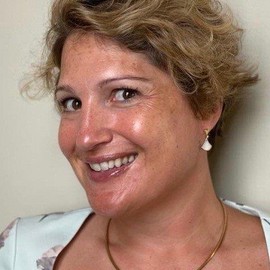


Researchers
Aleksandar Gavric
Univ.Ass. MEng MSc BEngCharlotte Roos R. Verbruggen
Univ.Ass. PhDJonas Max Lindner
Univ.Ass. MSc
Marco Huymajer
Senior Lecturer Dipl.-Ing. BSc
Marianne Schnellmann
Univ.Ass. MScMarion Murzek
Senior Lecturer Mag.a rer.soc.oec.Dr.in rer.soc.oec.
Marion Scholz
Senior Lecturer Dipl.-Ing.inMag.a rer.soc.oec.
Miki Zehetner
Univ.Ass. DI Bakk.rer.soc.oec. MSc