

Gerti Kappel
O.Univ.Prof.in Dipl.-Ing.in
Mag.a Dr.in techn.
Gerti Kappel
- Email: gertrude.kappel@tuwien.ac.at
- Phone: +43-1-58801-18870
- Office: FB0109 (1040 Wien, Erzherzog-Johann-Platz 1)
- About:
Gerti Kappel is full professor at the Institute of Information Systems Engineering at TU Wien, in the Business Informatics Group. Prior to that, from 1993 to 2001, she was a full professor of computer science (database systems) and head of the Department of Information Systems at the Johannes Kepler University Linz.
From 2016 to 2019, she was a member of the dean’s team of the Faculty of Informatics responsible for research, diversity, and financial affairs. Since the beginning of 2020 she acts as the dean of the Faculty of Informatics at TU Wien.
Her current research interests include Model Engineering, Web Engineering, and Process Engineering, with a special emphasis on cyber-physical production systems. Striving for the unity of research and teaching, she co-authored and co-edited among others „UML@Work“ (dpunkt.verlag, 3rd ed, 2005), „UML@Classroom“ (Springer, 2015), and „Web Engineering“ (Wiley, 2006).
- Orcid: 0000-0002-4758-9436
- Keywords: Process Engineering, Data Engineering, Services Engineering, UML and XML, Business Process Management (BPM), Model Engineering, Workflow Management Systems (WFMS), Web Engineering, Object Orientation, Software Engineering
- Roles: Head of Services, Full Professor
Publications
Model-Driven Time-Series Analytics
 Sabine WolnyAlexandra MazakManuel WimmerRafael Konlechner
Wolny, S., Mazak, A., Wimmer, M., Konlechner, R., & Kappel, G. (2018). Model-Driven Time-Series Analytics. Enterprise Modelling and Information Systems Architectures : International Journal of Conceptual Modeling, 13, 252–261. https://doi.org/10.18417/emisa.si.hcm.19
A Systematic Review of Cloud Modeling Languages
Alexander BergmayrUwe BreitenbücherNicolas FerryAlessandro RossiniArnor SolbergManuel WimmerFrank LeymannKeywords:
Astract: Modern cloud computing environments support a relatively high degree of automation in service provisioning, which allows
cloud service customers (CSC) to dynamically acquire services required for deploying cloud applications. Cloud modeling
languages (CMLs) have been proposed to address the diversity of features provided by cloud computing environments and
support different application scenarios, e.g., migrating existing applications to the cloud, developing new cloud applications,
or optimizing them. There is, however, still much debate in the research community on what a CML is and what aspects of
a cloud application and its target cloud computing environment should be modeled by a CML. Furthermore, the distinction
between CMLs on a fine-grained level exposing their modeling concepts is rarely made. In this article, we investigate the
diverse features currently provided by existing CMLs. We classify and compare them according to a common framework
with the goal to support CSCs in selecting the CML which fits the needs of their application scenario and setting. As a result,
not only features of existing CMLs are pointed out for which extensive support is already provided but also in which existing
CMLs are deficient, thereby suggesting a research agenda.
Bergmayr, A., Breitenbücher, U., Ferry, N., Rossini, A., Solberg, A., Wimmer, M., Kappel, G., & Leymann, F. (2018). A Systematic Review of Cloud Modeling Languages. ACM Computing Surveys, 51(1), 1–38. https://doi.org/10.1145/3150227
Towards a body of knowledge for model-based software engineering
Federico CiccozziMichalis FamelisLeen LambersSebastien MosserRichard F. PaigeAlfonso PierantonioArend RensinkRick SalayGabi TaentzerAntonio VallecilloManuel Wimmer
Ciccozzi, F., Famelis, M., Kappel, G., Lambers, L., Mosser, S., Paige, R. F., Pierantonio, A., Rensink, A., Salay, R., Taentzer, G., Vallecillo, A., & Wimmer, M. (2018). Towards a body of knowledge for model-based software engineering. In Proceedings of the 21st ACM/IEEE International Conference on Model Driven Engineering Languages and Systems: Companion Proceedings. MODELS 2018, Kopenhagen, Denmark. ACM. https://doi.org/10.1145/3270112.3270121
How do we teach modelling and model-driven engineering?: a survey
Federico CiccozziMichalis FamelisLeen LambersSebastien MosserRichard F. PaigeAlfonso PierantonioArend RensinkRick SalayGabi TaentzerAntonio VallecilloManuel Wimmer
Ciccozzi, F., Famelis, M., Kappel, G., Lambers, L., Mosser, S., Paige, R. F., Pierantonio, A., Rensink, A., Salay, R., Taentzer, G., Vallecillo, A., & Wimmer, M. (2018). How do we teach modelling and model-driven engineering?: a survey. In Proceedings of the 21st ACM/IEEE International Conference on Model Driven Engineering Languages and Systems: Companion Proceedings. MODELS 2018, Kopenhagen, Denmark. ACM. https://doi.org/10.1145/3270112.3270129
Interoperability and Integration in Future Production Systems
Manuel WimmerSiegfried ReichWernher BehrendtStefan ThalmannGeorg WeichhartAlois ZoitlKeywords:
Astract: Research in areas of Internet of Things (IoT), Industry 4.0 (I4.0), Cyber Physical Systems (CPS), consider system-of-systems composed of hardware and software systems that seamless work together. Interoperability ranges from compatibility (systems do not disturb other systems, but no interaction between systems) to integration (systems that share a common model/worldview). Between these extremes a continuum of interoperability exists.
In any case, interoperability is a model-driven approach - in contrast to data-driven or machine-learning approaches, for example. In general, models contain modules, connections, and behavior descriptions of different types.
Integration and interoperability may not only be seen as (goal) states but also as processes. Changes in one system might trigger adaptation in other systems. However, in loose integration and interoperability settings there is more support for the evolution of models.
Huemer, C., Kappel, G., Wimmer, M., Proper, H. A., Reich, S., Behrendt, W., Thalmann, S., Weichhart, G., & Zoitl, A. (2018). Interoperability and Integration in Future Production Systems. In 2018 IEEE 20th Conference on Business Informatics (CBI). IEEE Computer Society, Wien, Austria. IEEE Computer Society. https://doi.org/10.1109/cbi.2018.10067
Teaching
Seminar for Master Students in Business Informatics
Semester: 2026S; Nr: 180.779; Type: SE; Hours: 1.0; Language: English; View on TISSResearch Seminar
Semester: 2026S; Nr: 188.446; Type: SE; Hours: 2.0; Language: if required in English; View on TISSLiterature Seminar for PhD Students
Semester: 2026S; Nr: 188.512; Type: SE; Hours: 2.0; Language: German; View on TISSBachelor Thesis for Informatics and Business Informatics
Semester: 2026S; Nr: 188.926; Type: PR; Hours: 5.0; Language: if required in English; View on TISSProject in Computer Science 1
Semester: 2026S; Nr: 194.145; Type: PR; Hours: 4.0; Language: if required in English; View on TISSProject in Computer Science 2
Semester: 2026S; Nr: 194.146; Type: PR; Hours: 4.0; Language: if required in English; View on TISSIntroduction to Quantum Algorithms
Semester: 2026S; Nr: 199.022; Type: VU; Hours: 2.0; Language: English; View on TISSSeminar for Master Students in Business Informatics
Semester: 2025W; Nr: 180.779; Type: SE; Hours: 1.0; Language: English; View on TISSResearch Seminar
Semester: 2025W; Nr: 188.446; Type: SE; Hours: 2.0; Language: if required in English; View on TISSLiterature Seminar for PhD Students
Semester: 2025W; Nr: 188.512; Type: SE; Hours: 2.0; Language: German; View on TISSBachelor Thesis for Informatics and Business Informatics
Semester: 2025W; Nr: 188.926; Type: PR; Hours: 5.0; Language: if required in English; View on TISSScientific Research and Writing
Semester: 2025W; Nr: 193.052; Type: SE; Hours: 2.0; Language: German; View on TISSProject in Computer Science 1
Semester: 2025W; Nr: 194.145; Type: PR; Hours: 4.0; Language: if required in English; View on TISSSustainability in Computer Science
Semester: 2025W; Nr: 194.155; Type: VU; Hours: 2.0; Language: English; View on TISSSeminar in Computer Science (Model Engineering)
Semester: 2025W; Nr: 194.198; Type: SE; Hours: 2.0; Language: German; View on TISSProjects
Digitale Kompetenzen @ Parlament
Name: DKP; Title: Digitale Kompetenzen @ Parlament; Begins On: 2021-04-01; Ends On: 2021-09-30; Context: Parlamentsdirektion; View Project WebsiteIFC-Roundtrip und Plangrafiken
Name: IFC-Roundtrip und Plangrafiken; Title: IFC-Roundtrip und Plangrafiken; Begins On: 2019-01-01; Ends On: 2020-06-30; Context: tbw solutions ZT GesmbH; View Project WebsiteVienna Informatics Living Lab
Name: Vienna Informatics Living Lab; Title: Vienna Informatics Living Lab; Begins On: 2018-08-01; Ends On: 2019-07-31; Context: Vienna Business Agency (WAW); View Project WebsiteMulti-Paradigm Modelling for Cyber-Physical Systems (MPM4CPS)
Name: MPM4CPS; Title: Multi-Paradigm Modelling for Cyber-Physical Systems (MPM4CPS); Begins On: 2014-10-01; Ends On: 2019-05-31; Context: European Cooperation in Science and Technology (COST); View Project WebsiteCOSIMO: Collaborative Configuration Systems Integration and Modeling
Name: COSIMO; Title: COSIMO: Collaborative Configuration Systems Integration and Modeling; Begins On: 2014-01-01; Ends On: 2017-05-30; Context: Vienna Business Agency (WAW); View Project WebsiteARTIST: Advanced software-based seRvice provisioning and migraTIon of legacy Software
Name: ARTIST; Title: ARTIST: Advanced software-based seRvice provisioning and migraTIon of legacy Software; Begins On: 2012-10-01; Ends On: 2015-09-30; Context: European Commission; View Project WebsiteDARWIN - Model-driven Development and Evolution of Semantic Infrastructures
Name: DARWIN; Title: DARWIN - Model-driven Development and Evolution of Semantic Infrastructures; Begins On: 2012-03-01; Ends On: 2015-02-28; Context: Austrian Research Promotion Agency (FFG); View Project WebsiteTROPIC: A Framework for Model Transformations on Petri Nets in Color
Name: TROPIC; Title: TROPIC: A Framework for Model Transformations on Petri Nets in Color; Begins On: 2009-03-01; Ends On: 2012-08-31; Context: Austrian Science Fund (FWF); View Project WebsiteAMOR: Adaptable Model Versioning
Name: AMOR; Title: AMOR: Adaptable Model Versioning; Begins On: 2009-02-01; Ends On: 2011-09-30; Context: SparxSystems Software GmbH; View Project WebsiteDevelopment of a WEB-based database for the global administration of CAN-Data
Name: Rosenbauer-DB; Title: Development of a WEB-based database for the global administration of CAN-Data; Begins On: 2008-09-01; Ends On: 2009-04-30; Context: Rosenbauer; View Project WebsiteModel-Driven Web Engineering net
Name: MDWEnet; Title: Model-Driven Web Engineering net; Begins On: 2006-12-01; Ends On: 2010-12-31; Context: Johannes Kepler Universität Linz; View Project WebsiteTRACK and TRADE: Creating a Data Mart for Floating Car Data
Name: TRACK™ Title: TRACK and TRADE: Creating a Data Mart for Floating Car Data; Begins On: 2006-10-01; Ends On: 2008-09-30; Context: European Commission; View Project WebsiteModelCVS: A Semantic Infrastructure for Model-based Tool Integration
Name: ModelCVS; Title: ModelCVS: A Semantic Infrastructure for Model-based Tool Integration; Begins On: 2006-01-01; Ends On: 2007-12-31; Context: ARIKAN Productivity Group GesmbH; View Project WebsiteZELESSA: An Enabler for Real-time Business Intelligence
Name: ZELESSA; Title: ZELESSA: An Enabler for Real-time Business Intelligence; Begins On: 2006-01-01; Ends On: 2007-06-30; Context: Österr. Nationalbibliothek; View Project WebsiteAdmina.at goes Austria
Name: Admina.at; Title: Admina.at goes Austria; Begins On: 2005-12-01; Ends On: 2007-09-30; Context: Federal Ministry of Science and Research (bm:wf); View Project WebsiteWomen's Postgraduate College for Internet Technologies
Name: WIT; Title: Women's Postgraduate College for Internet Technologies; Begins On: 2003-01-01; Ends On: 2007-12-31; Context: European Commission; View Project WebsiteTeam
Business Informatics Group, TU Wien
Professors
Christian Huemer
Ao.Univ.Prof. Mag.rer.soc.oec.Dr.rer.soc.oec.
Dominik Bork
Associate Prof. Dipl.-Wirtsch.Inf.Univ.Dr.rer.pol.
Gerti Kappel
O.Univ.Prof.in Dipl.-Ing.inMag.a Dr.in techn.
Henderik Proper
Univ.Prof. PhD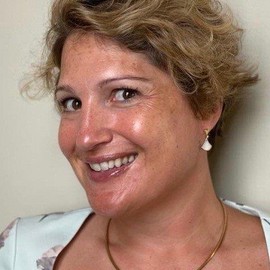
Researchers
Aleksandar Gavric
Univ.Ass. MEng MSc BEngCharlotte Roos R. Verbruggen
Univ.Ass. PhDJonas Max Lindner
Univ.Ass. MSc
Marco Huymajer
Senior Lecturer Dipl.-Ing. BSc
Marianne Schnellmann
Univ.Ass. MScMarion Murzek
Senior Lecturer Mag.a rer.soc.oec.Dr.in rer.soc.oec.
Marion Scholz
Senior Lecturer Dipl.-Ing.inMag.a rer.soc.oec.
Miki Zehetner
Univ.Ass. DI Bakk.rer.soc.oec. MSc