

Manuel Wimmer

Privatdoz. Mag.rer.soc.oec. Dr.rer.soc.oec.
Manuel Wimmer
- Email: manuel.wimmer@tuwien.ac.at
- Phone:
- Office: (1040 Wien, Favoritenstrasse 11)
- About: UML, Object-oriented Modeling, Domain-specific Modeling, Metamodeling, Model Transformation, Software Engineering, Web Engineering, Model Engineering, Industrial Engineering, Automation Engineering, Multi-disciplinary Engineering
- Orcid:
- Keywords: Model Driven Engineering, Web Engineering, Model Transformation
- Roles: Affiliated
Publications
Contents for a Model-Based Software Engineering Body of Knowledge
Loli BurgueñoFederico CiccozziMichalis FamelisLeen LambersSebastien MosserRichard F. PaigeAlfonso PierantonioArend RensinkRick SalayGabriele TaentzerAntonio VallecilloManuel WimmerKeywords:
Astract: Although Model-Based Software Engineering (MBE) is a widely accepted Software Engineering (SE) discipline, no agreed-upon core set of concepts and practices (i.e., a Body of Knowledge) has been defined for it yet. With the goals of characterizing the contents of the MBE discipline, promoting a global consistent view of it, clarifying its scope with regard to other SE disciplines, and defining a foundation for the development of educational curricula on MBE, this paper proposes the contents for a Body of Knowledge for MBE. We also describe the methodology that we have used to come up with the proposed list of contents, as well as the results of a survey study that we conducted to sound out the opinion of the community on the importance of the proposed topics and their level of coverage in the existing SE curricula.
Burgueño, L., Ciccozzi, F., Famelis, M., Kappel, G., Lambers, L., Mosser, S., Paige, R. F., Pierantonio, A., Rensink, A., Salay, R., Taentzer, G., Vallecillo, A., & Wimmer, M. (2019). Contents for a Model-Based Software Engineering Body of Knowledge. Software and Systems Modeling, 18(6), 3193–3205. https://doi.org/10.1007/s10270-019-00746-9
Flexible Production Systems: Automated Generation of Operations Plans based on ISA-95 and PDDL
Bernhard WallyJiri VyskocilPetr NovakRadek SindelarPetr KaderaAlexandra MazakManuel WimmerKeywords:
Astract: Model-driven engineering (MDE) provides tools and methods for the manipulation of formal models. In this letter, we leverage MDE for the transformation of production system models into flat files that are understood by general purpose planning tools and that enable the computation of "plans", i.e., sequences of production steps that are required to reach certain production goals. These plans are then merged back into the production system model, thus enriching the formalized production system knowledge.
Wally, B., Vyskocil, J., Novak, P., Huemer, C., Sindelar, R., Kadera, P., Mazak, A., & Wimmer, M. (2019). Flexible Production Systems: Automated Generation of Operations Plans based on ISA-95 and PDDL. IEEE Robotics and Automation Letters, 4(4), 4062–4069. https://doi.org/10.1109/lra.2019.2929991
Production Planning with IEC 62264 and PDDL
Bernhard WallyJiří VyskočilPetr NovakRadek SindelarP. KaderaAlexandra MazakManuel WimmerKeywords:
Astract: Smart production systems need to be able to adapt to changing environments and market needs. They have to reflect changes in (i) the reconfiguration of the production systems themselves, (ii) the processes they perform or (iii) the products they produce. Manual intervention for system adaptation is costly and potentially error-prone. In this article, we propose a model-driven approach for the automatic generation and regeneration of production plans that can be triggered anytime a change in any of the three aforementioned parameters occurs.
Wally, B., Vyskočil, J., Novak, P., Huemer, C., Sindelar, R., Kadera, P., Mazak, A., & Wimmer, M. (2019). Production Planning with IEC 62264 and PDDL. In Proceedings of the 17th IEEE International Conference on Industrial Informatics (INDIN 2019) (pp. 492–499). IEEE. http://hdl.handle.net/20.500.12708/57844
Generating Structured AutomationML Models from IEC 62264 Information
Bernhard WallyLaurens LangRafał WłodarskiRadek SindelarAlexandra MazakManuel WimmerKeywords:
Astract: AutomationML provides a versatile modeling environment for the description of production systems. However, when starting a new AutomationML project, or when serializing existing data with the AutomationML format, there are no rules on how to structure these models in a meaningful way. In this work, we present an approach for structuring AutomationML models, based on the IEC 62264 standard. In our approach we are implementing the process of serializing IEC 62264 information declaratively, by leveraging the power of model transformations, as they are applied in the context of model-driven (software) engineering.
Wally, B., Lang, L., Włodarski, R., Sindelar, R., Huemer, C., Mazak, A., & Wimmer, M. (2019). Generating Structured AutomationML Models from IEC 62264 Information. In Proceedings of the 5th AutomationML PlugFest 2019 (p. 5). http://hdl.handle.net/20.500.12708/57845
Leveraging annotation-based modeling with JUMP
Alexander BergmayrMichael GrossniklausManuel WimmerKeywords: Java annotations, UML profiles, Model-based software engineering, Forward engineering, Reverse engineering
Astract: The capability of UML profiles to serve as annotation mechanism has been recognized in both research and industry. Today’s modeling tools offer profiles specific to platforms, such as Java, as they facilitate model-based engineering approaches. However, considering the large number of possible annotations in Java, manually developing the corresponding profiles would only be achievable by huge development and maintenance efforts. Thus, leveraging annotation-based modeling requires an automated approach capable of generating platform-specific profiles from Java libraries. To address this challenge, we present the fully automated transformation chain realized by Jump, thereby continuing existing mapping efforts between Java and UML by emphasizing on annotations and profiles. The evaluation of Jump shows that it scales for large Java libraries and generates profiles of equal or even improved quality compared to profiles currently used in practice. Furthermore, we demonstrate the practical value of Jump by contributing profiles that facilitate reverse engineering and forward engineering processes for the Java platform by applying it to a modernization scenario.
Bergmayr, A., Grossniklaus, M., Wimmer, M., & Kappel, G. (2018). Leveraging annotation-based modeling with JUMP. Software and Systems Modeling. https://doi.org/10.1007/s10270-016-0528-y
Projects
Multi-Paradigm Modelling for Cyber-Physical Systems (MPM4CPS)
Name: MPM4CPS; Title: Multi-Paradigm Modelling for Cyber-Physical Systems (MPM4CPS); Begins On: 2014-10-01; Ends On: 2019-05-31; Context: European Cooperation in Science and Technology (COST); View Project WebsiteCOSIMO: Collaborative Configuration Systems Integration and Modeling
Name: COSIMO; Title: COSIMO: Collaborative Configuration Systems Integration and Modeling; Begins On: 2014-01-01; Ends On: 2017-05-30; Context: Vienna Business Agency (WAW); View Project WebsiteARTIST: Advanced software-based seRvice provisioning and migraTIon of legacy Software
Name: ARTIST; Title: ARTIST: Advanced software-based seRvice provisioning and migraTIon of legacy Software; Begins On: 2012-10-01; Ends On: 2015-09-30; Context: European Commission; View Project WebsiteTROPIC: A Framework for Model Transformations on Petri Nets in Color
Name: TROPIC; Title: TROPIC: A Framework for Model Transformations on Petri Nets in Color; Begins On: 2009-03-01; Ends On: 2012-08-31; Context: Austrian Science Fund (FWF); View Project WebsiteAMOR: Adaptable Model Versioning
Name: AMOR; Title: AMOR: Adaptable Model Versioning; Begins On: 2009-02-01; Ends On: 2011-09-30; Context: SparxSystems Software GmbH; View Project WebsiteTeam
Business Informatics Group, TU Wien
Professors
Christian Huemer
Ao.Univ.Prof. Mag.rer.soc.oec.Dr.rer.soc.oec.
Dominik Bork
Associate Prof. Dipl.-Wirtsch.Inf.Univ.Dr.rer.pol.
Gerti Kappel
O.Univ.Prof.in Dipl.-Ing.inMag.a Dr.in techn.
Henderik Proper
Univ.Prof. PhD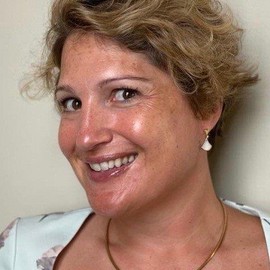

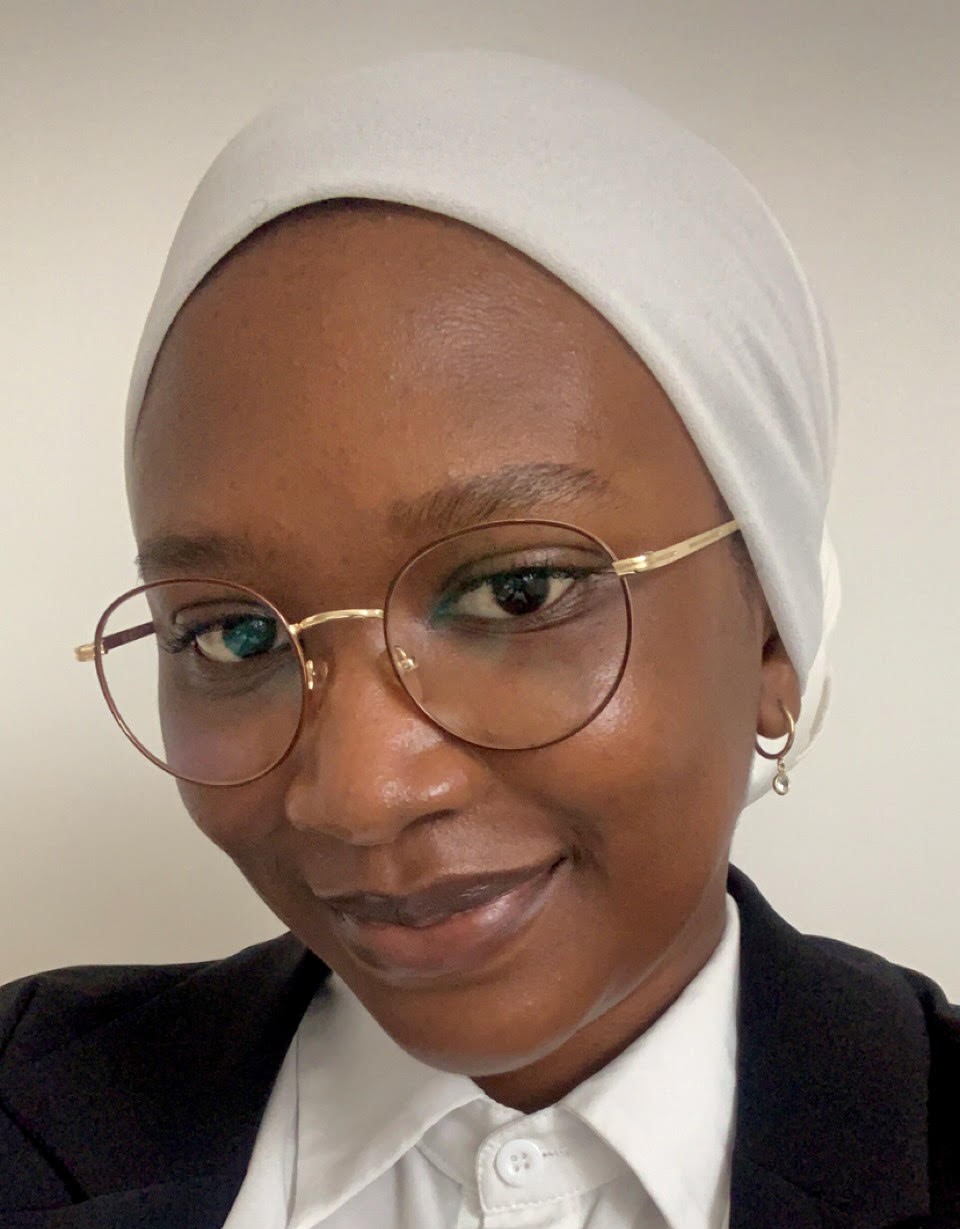
Researchers
Aleksandar Gavric
Univ.Ass. MEng MSc BEngCharlotte Roos R. Verbruggen
Univ.Ass. PhDJonas Max Lindner
Univ.Ass. MSc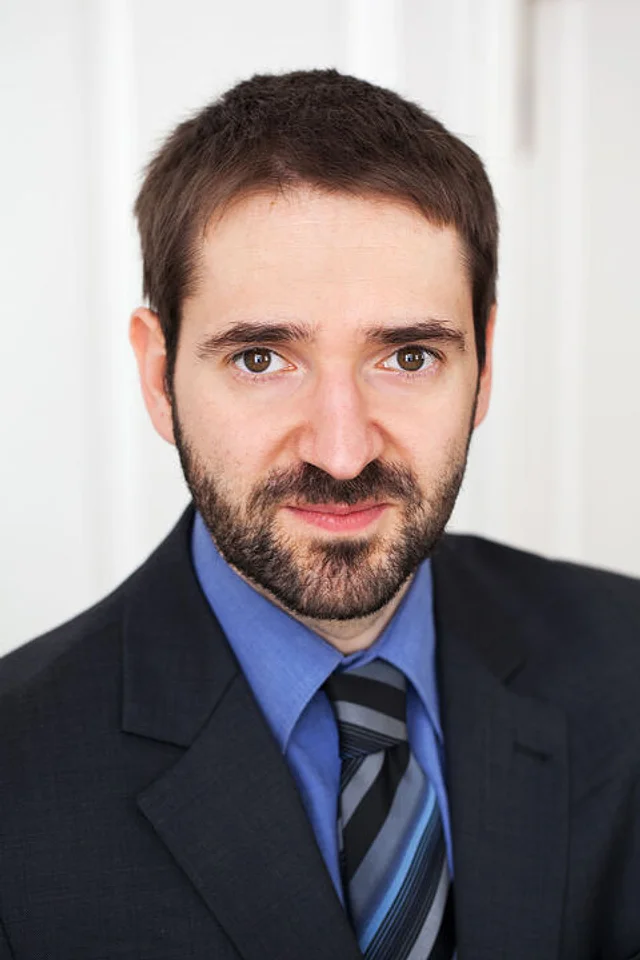
Marco Huymajer
Senior Lecturer Dipl.-Ing. BSc
Marianne Schnellmann
Univ.Ass. MScMarion Murzek
Senior Lecturer Mag.a rer.soc.oec.Dr.in rer.soc.oec.
Marion Scholz
Senior Lecturer Dipl.-Ing.inMag.a rer.soc.oec.
Miki Zehetner
Univ.Ass. DI Bakk.rer.soc.oec. MSc